
 |  |  |  |
The Rise of the Creative Generalist in an AI-Driven Economy
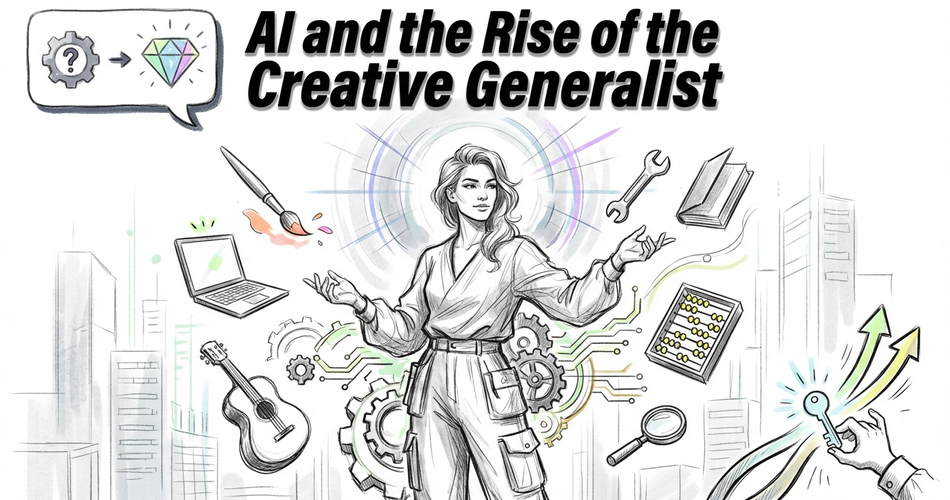
Are we on the cusp of an economic revolution? A seismic shift that's fundamentally reshaping how we work, create, and who truly holds power? Absolutely. At the heart of this transformation lies a profoundly human, yet deeply augmented, archetype: the Creative Generalist.
The Fading Era of Specialization
For over two centuries, since the roaring steam engines heralded the Industrial Revolution, our economic world has been predicated on the powerful idea of specialization. The division of labor, breaking down large tasks into smaller, repeatable parts, and mastering one such piece, drove unprecedented productivity and built entire industries. This relentless focus on narrow expertise shaped careers and economies.
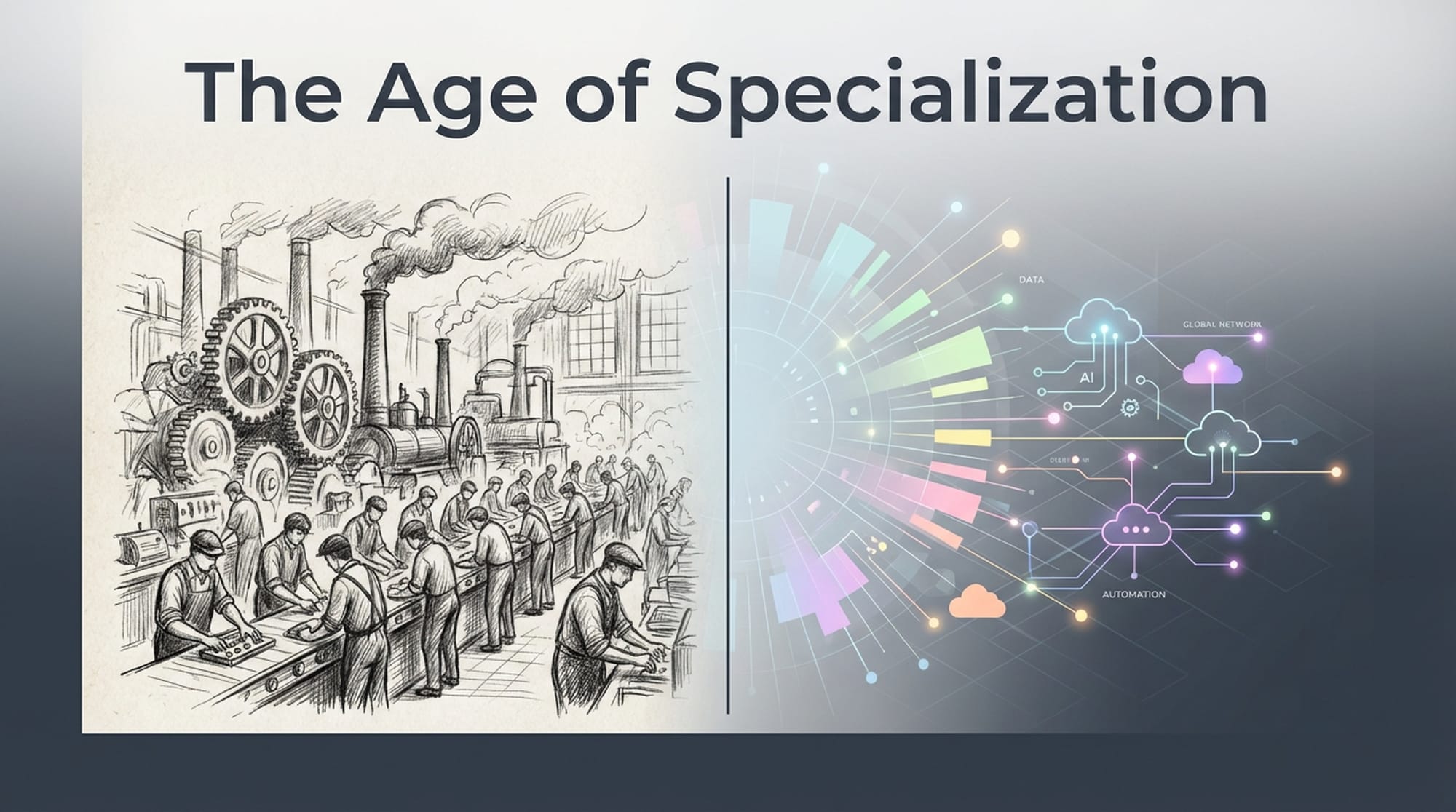
However, this 250-year-old paradigm is crumbling. The very force defining our modern era — Artificial Intelligence — isn't just changing the rules; it's inverting them entirely. This isn't merely an evolution; it's a foundational change that demands our embrace.
"The 250-year-old paradigm of specialization is crumbling, inverted by the transformative power of Artificial Intelligence."
Enter the Deep Generalist: The New Archetype
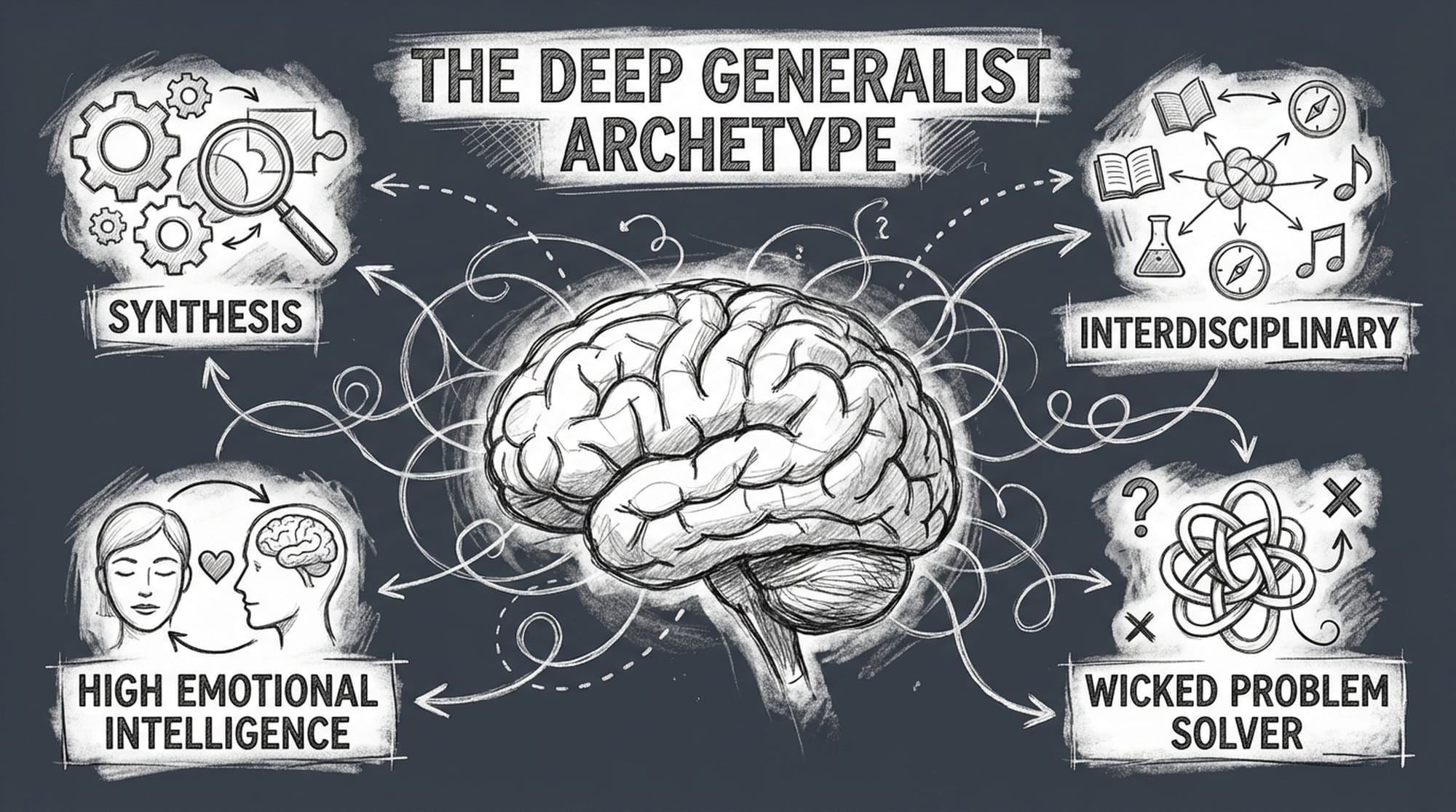
We are witnessing the emergence of a new kind of professional. Not the specialist, who knows "more and more about less and less," but the Deep Generalist. This is an individual capable of connecting seemingly disparate domains, synthesizing diverse knowledge, and possessing high emotional intelligence to navigate the complex, human elements of innovation.
The World Economic Forum, in its 2025 Future of Jobs Report, delivers a stark prognostication: a staggering 40% of our core skills will change by 2030. This is a metamorphosis, not merely an evolution. As AI automates routine tasks with increasing efficiency, the premium once placed on hyper-specialization is rapidly eroding. The market is now unequivocally "screaming for versatility."
AI: The Ultimate Competence Multiplier
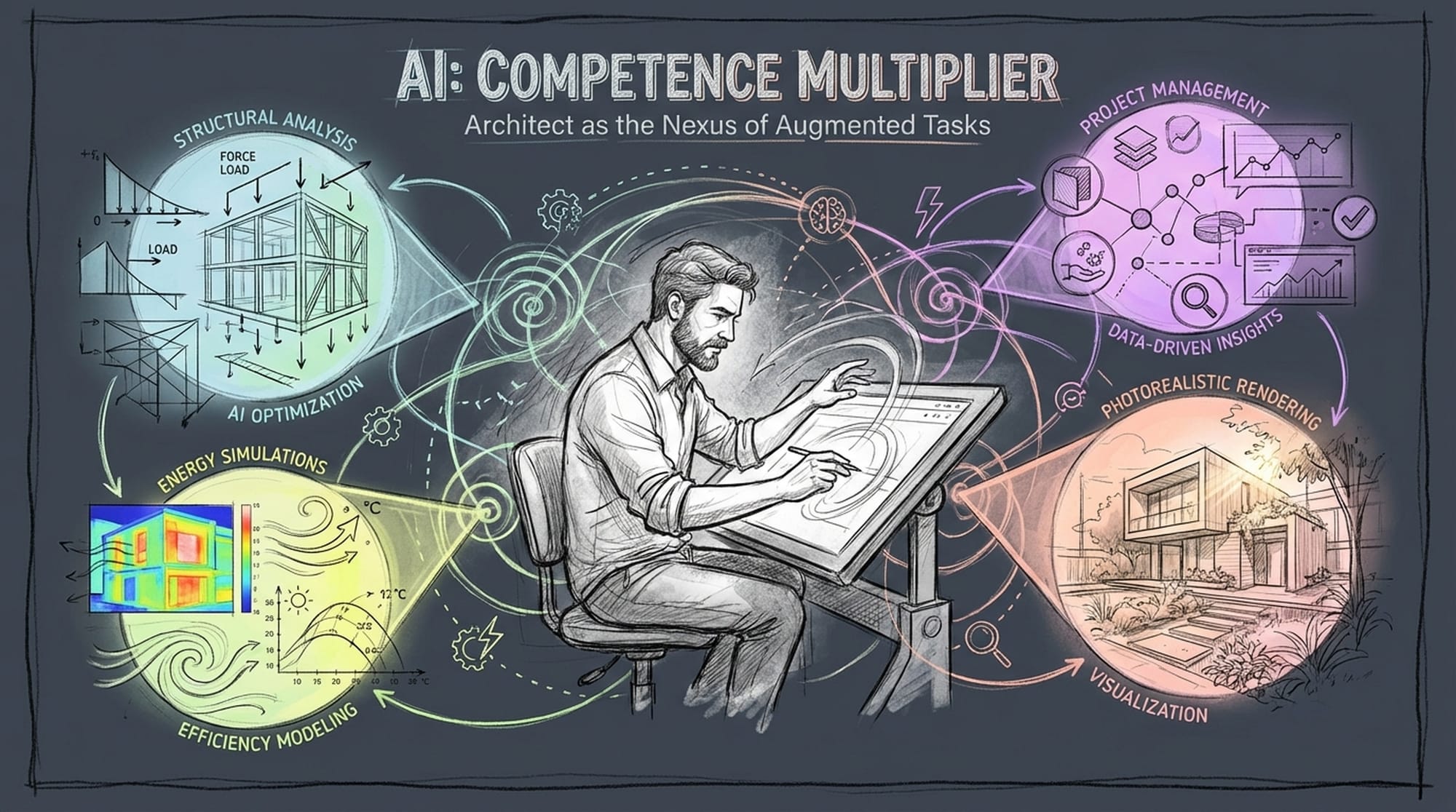
Consider AI not as a replacement for human intellect, but as a powerful competence multiplier.
"AI doesn’t replace human intellect; it multiplies human competence, allowing a single individual to achieve the output of entire specialized teams."
Imagine an architect empowered not just to design a building, but also to instantly calculate its structural integrity, simulate energy efficiency, and generate photorealistic renderings—tasks that once required entire teams of specialists. AI now allows a generalist to perform technical feats, such as coding, data analysis, or legal review, that previously demanded years of dedicated training. This represents more than just efficiency; it's a profound shift in leverage.
This shift is already reshaping career trajectories. Career growth is no longer a linear ladder but a strategic repositioning. Versatility, supercharged by AI, is rapidly becoming the ultimate competitive advantage. The ability to ask insightful questions and possess "contextual intelligence" now truly matters, far more than narrow technical skill execution.
The Billionaire Creative Generalist: A Bold Prediction
Here's where it gets controversial: I believe this economic shift will not only create a new class of highly effective professionals but also a new generation of billionaires. Yes, you read that correctly. Creative Generalists, leveraging AI, will become billionaires, and not in some distant utopia, but potentially by 2027.
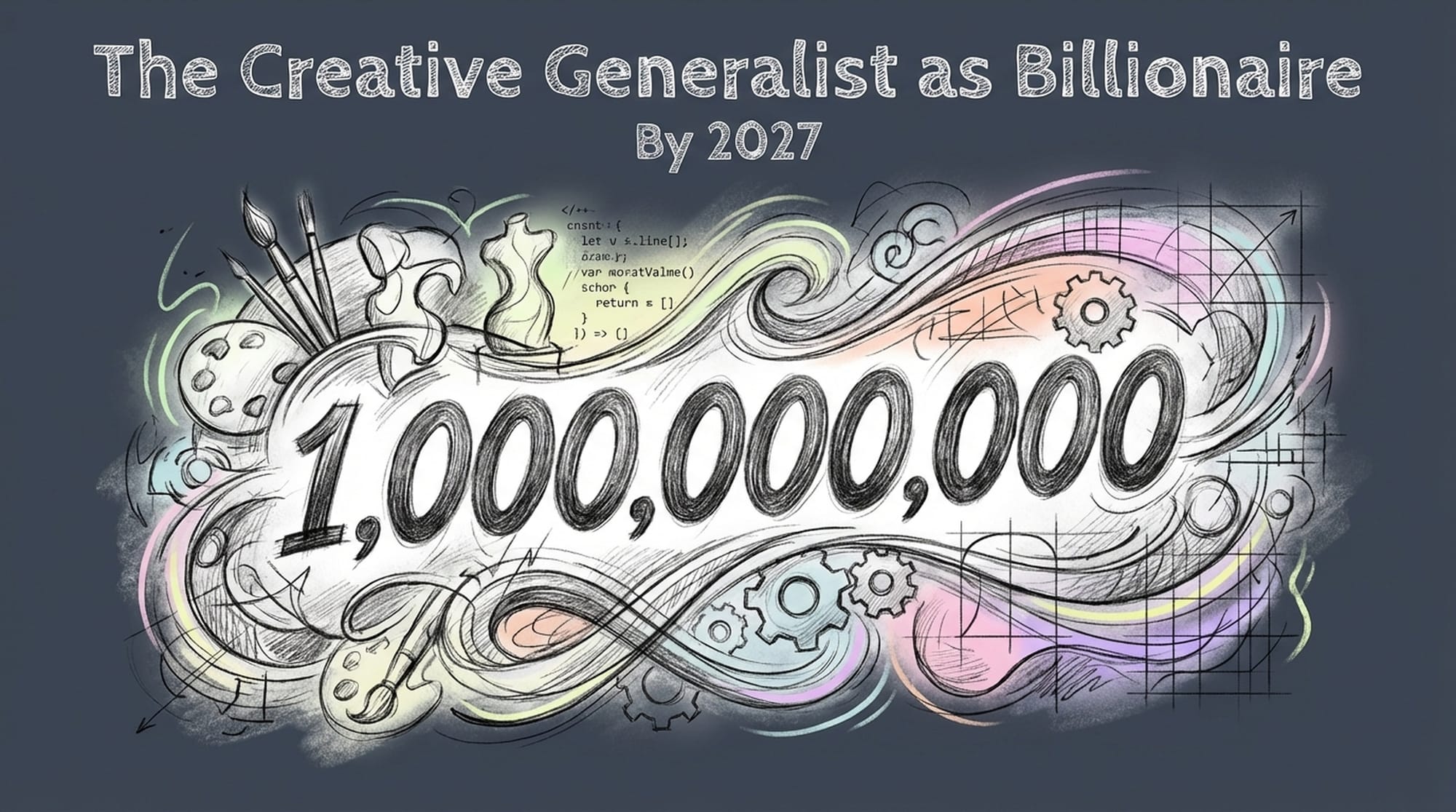
This might seem like wild optimism, but let's examine the flow of capital. Over half of all global venture capital is pouring into AI startups. This is an economic tidal wave. However, a significant portion of this capital is funneled into foundational models and infrastructure providers like OpenAI, Anthropic, xAI, and Nvidia. These are the "picks and shovels" of the AI gold rush, the builders of the engines.
AI Democratizes Entrepreneurship
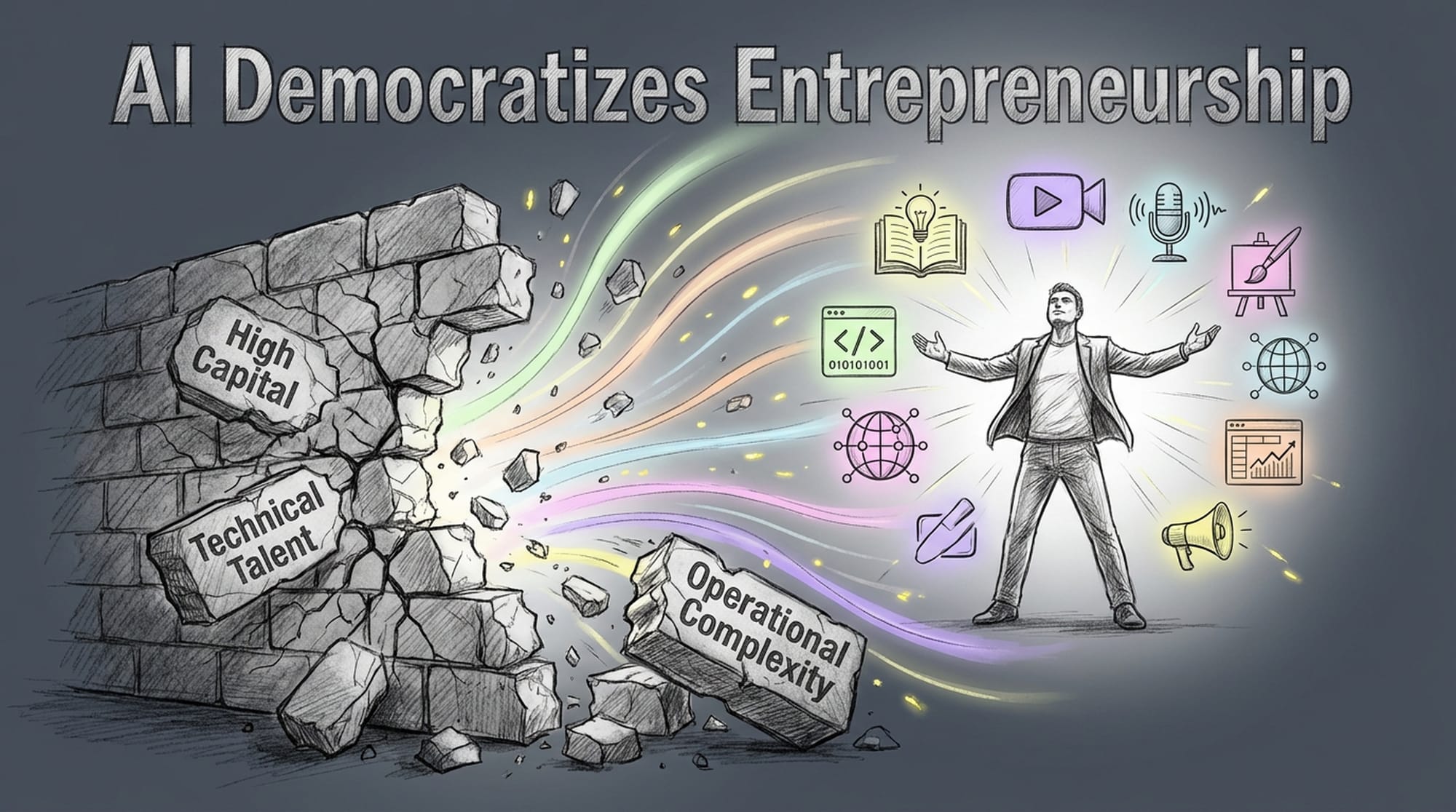
This capital allocation brings us to a crucial point: AI is democratizing entrepreneurship. It is systematically dismantling the traditional barriers to entry that historically prevented brilliant creatives from scaling their ideas into empires. What once impeded artists, writers, or designers from building global businesses?
- High capital requirements
- The need for technical co-founders
- Complex operational management
These were towering walls. AI is blowing them down.
Consider coding and product development. Tools like Cursor or myriad low-code platforms enable non-technical founders to build software products that previously demanded hundreds of thousands of dollars and an entire engineering team. Startups such as Lovable are achieving massive recurring revenue by simply leveraging AI for software engineering. A single individual, or a lean team, can now launch complex digital products.
AI empowers solo founders to automate customer service, marketing, sales, and complex data analysis. This effectively grants a single creative generalist the output capacity of a ten-person team. Imagine the amplified profit margins and unprecedented speed to market. Companies like MidJourney are generating millions in revenue with remarkably small teams, purely by leveraging generative AI models. This is not theoretical; it's happening right now.
"AI allows solo founders the output capacity of a ten-person team, supercharging profit margins and speed to market."
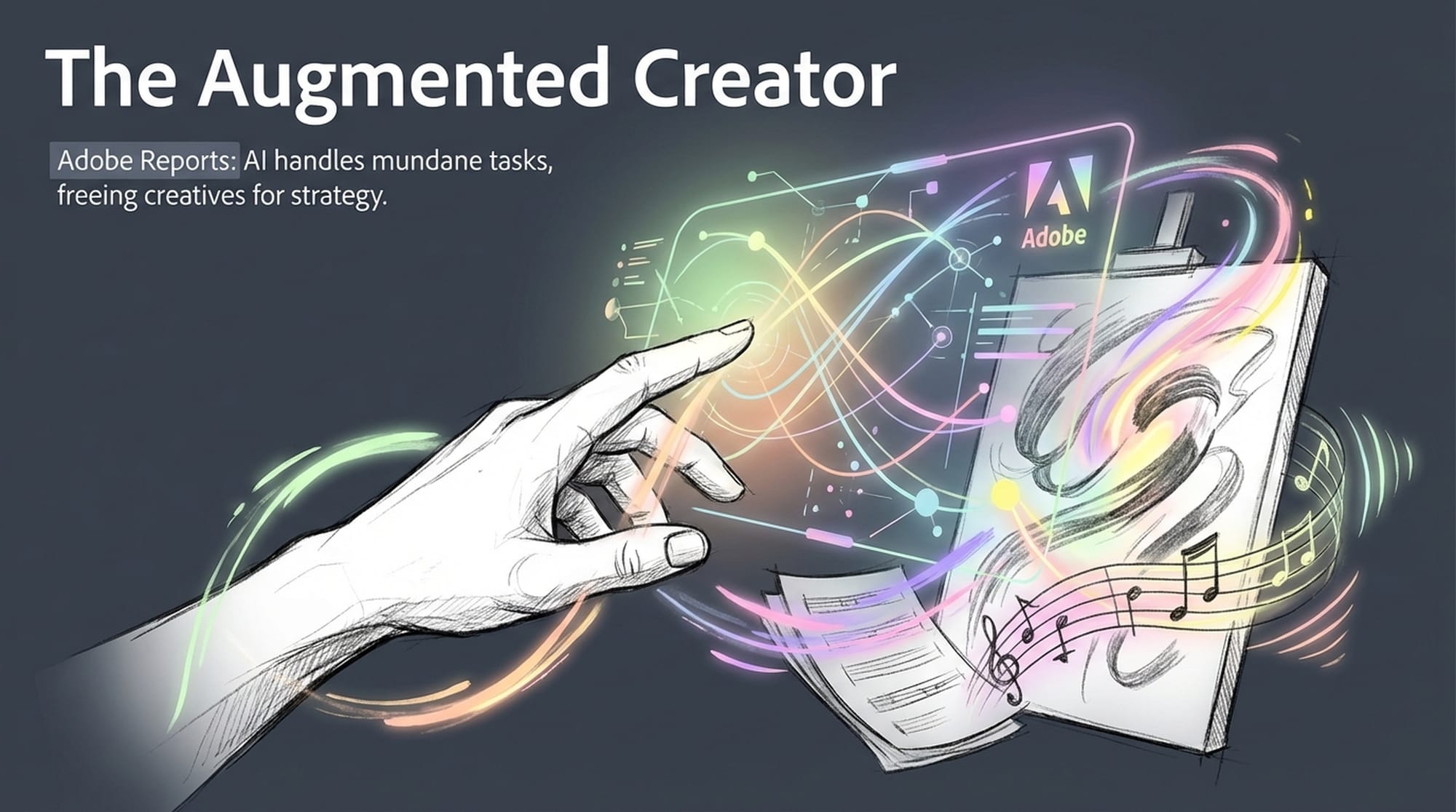
This paradigm is not about AI replacing the creator; it's about AI augmenting the creator to an unprecedented degree. Reports from Adobe, for instance, confirm that the vast majority of creative professionals are now using AI to handle mundane tasks, thereby freeing them to concentrate on high-level strategy and the truly human aspects of creation. This is where the billionaire potential lies: not in AI acting alone, but in humans leveraging AI to scale their unique vision and creativity.
Grasping "Artistic General Intelligence"
The term 'billionaire by 2027' is a bold claim, and skepticism is understandable. When discussing "artistic general intelligence," I'm not referring to a sci-fi AGI system autonomously creating masterpieces. My focus is on the human user's ability to act as a general intelligence, wielding AI tools with mastery and insight. It's about human intent, curation, and vision, amplified by AI's immense power. The current economic value resides in this hybrid model: human direction plus AI execution.
While the journey to billionaire status for creative generalists by 2027 is aggressive, the leverage AI provides is fundamentally shifting the landscape. The ability to create, disseminate, and monetize high-value content, educational programs, and even software ventures with dramatically reduced overhead is forging paths to extreme wealth that were unimaginable even five years ago.
Navigating the Risks
We must also acknowledge the counter-narratives and risks:
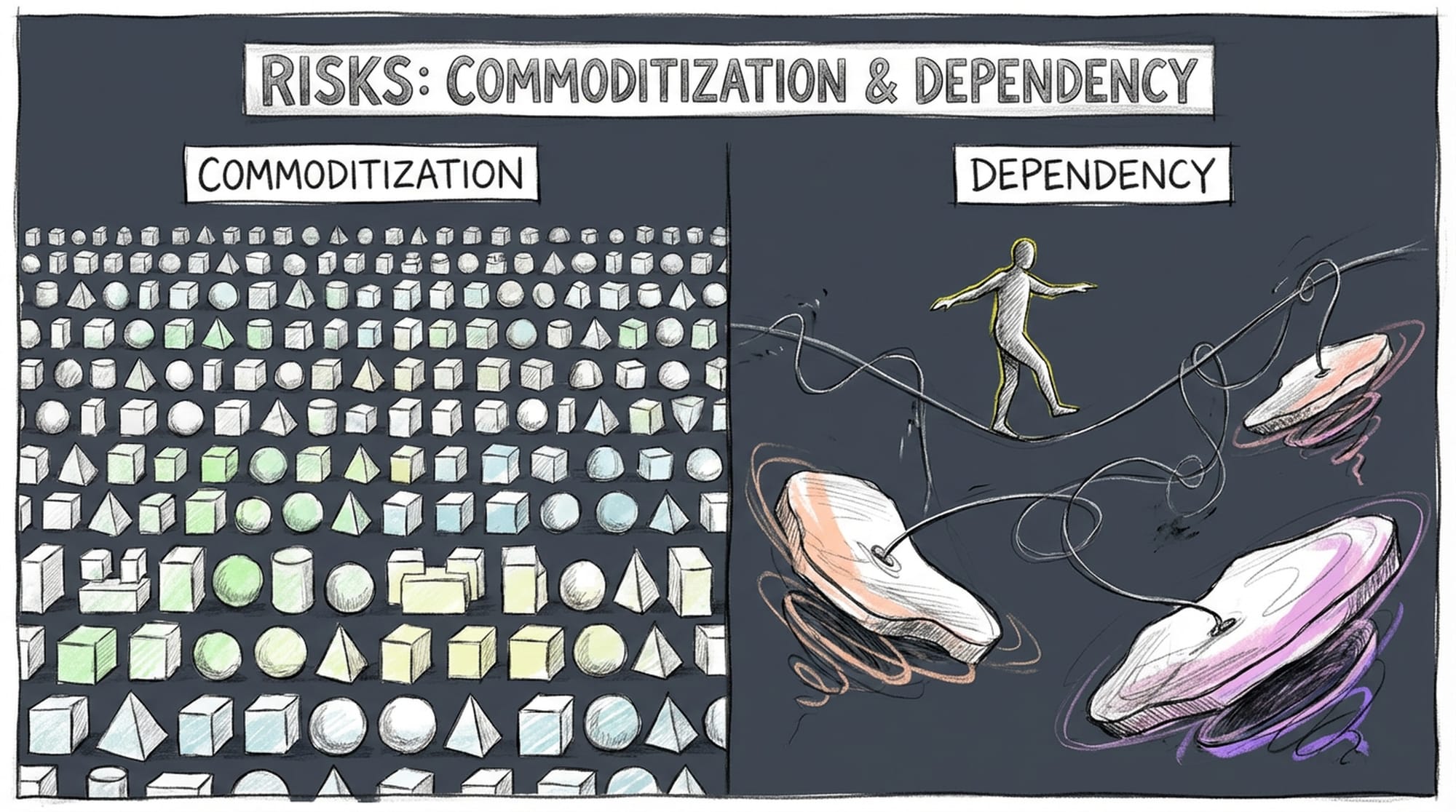
- Commoditization: If AI tools become universally accessible, won't the market become saturated? If everyone can instantly produce high-quality content or code, will its economic value decrease? This is a valid concern. The key lies in possessing a unique creative vision, a distinct voice, and the ability to foster genuine connection and community, which AI cannot fully replicate.
- Platform Dependency: Many creative generalists build their empires on "rented land"—platforms like YouTube, MidJourney, X, or OpenAI. What happens if these platforms suddenly alter their algorithms, pricing, or rules? This is a significant risk. The solution is to build a truly proprietary brand, cultivate direct customer relationships, and secure intellectual property that transcends any single platform.
- Copyright and Ethics: The legal landscape surrounding AI and copyright is a minefield. Lawsuits against AI models trained on copyrighted works pose a systemic risk. Should legal rulings challenge fair use, the foundation of many generative AI ventures could indeed crumble. This is a risk that cannot be ignored.
- Wealth Inequality: Many prominent economists warn that AI might exacerbate wealth inequality, funneling money to tech giants and capital owners rather than democratizing individual wealth. This is a critical societal challenge, and it underscores the importance of focusing on human-led, AI-augmented creativity.
The Unstoppable Current
The argument that AI shifts economic power to creative generalists is not just valid; it's undeniable. This is the direction of the future. The 'creative generalist' leveraging AI is indeed the premier archetype for the AI era. These individuals can build high-margin, lean, and scalable businesses that were utterly impossible just a few years ago.
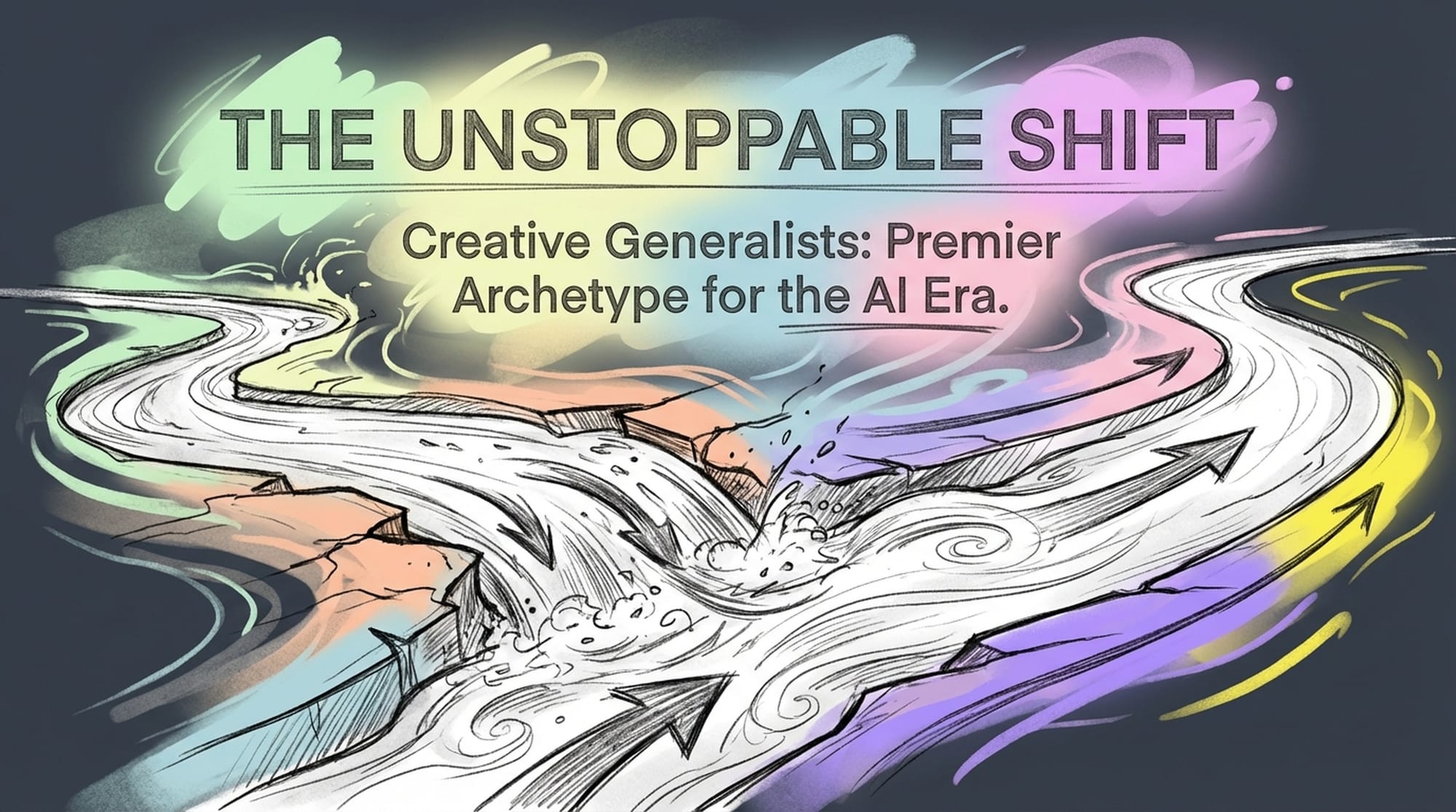
While the prediction of a wave of creative billionaires by 2027 remains ambitious for most, the truly massive wealth, for now, is being minted in the infrastructure layer of AI. However, this is likely a temporary state. As foundational tools become commoditized, the value will inevitably shift to those who can masterfully apply them. The next class of truly wealthy, high-earning entrepreneurs will undoubtedly be creative generalists. To achieve billionaire status, they will require not just a compelling creative product but also the strategic acumen to:
- Build network effects.
- Own intellectual property.
- Create a sustainable moat around their unique, AI-augmented vision.
The journey to astronomical wealth demands a leap from earning millions to owning a significant piece of the infrastructure of the future or creating a truly indispensable, globally scalable platform. And that, unequivocally, is precisely what the sophisticated, AI-enabled creative generalist is uniquely positioned to achieve.
Do not let anyone convince you that creativity and generalism are not the future of economic power. They are. The most impactful storytellers, visionary designers, and innovative problem solvers, armed with the exponential power of AI, are not just building businesses; they are building the next chapter of human ingenuity. And yes, for an elite few, they are building astonishing wealth in the process.
 |  |  |  |