
 |  |  |  |
The traditional model of business growth has always been a linear one: more revenue necessitated more people. This ingrained notion, deeply embedded in our economic fabric, has shaped everything from the factory floor to the sprawling corporate headquarters. Scaling a business invariably meant expanding the workforce, a fundamental axiom that has guided enterprises for centuries.
However, this foundational principle is now being challenged and shattered at an unprecedented pace. We are entering an era where the direct correlation between the number of employees and the revenue generated is rapidly decoupling.
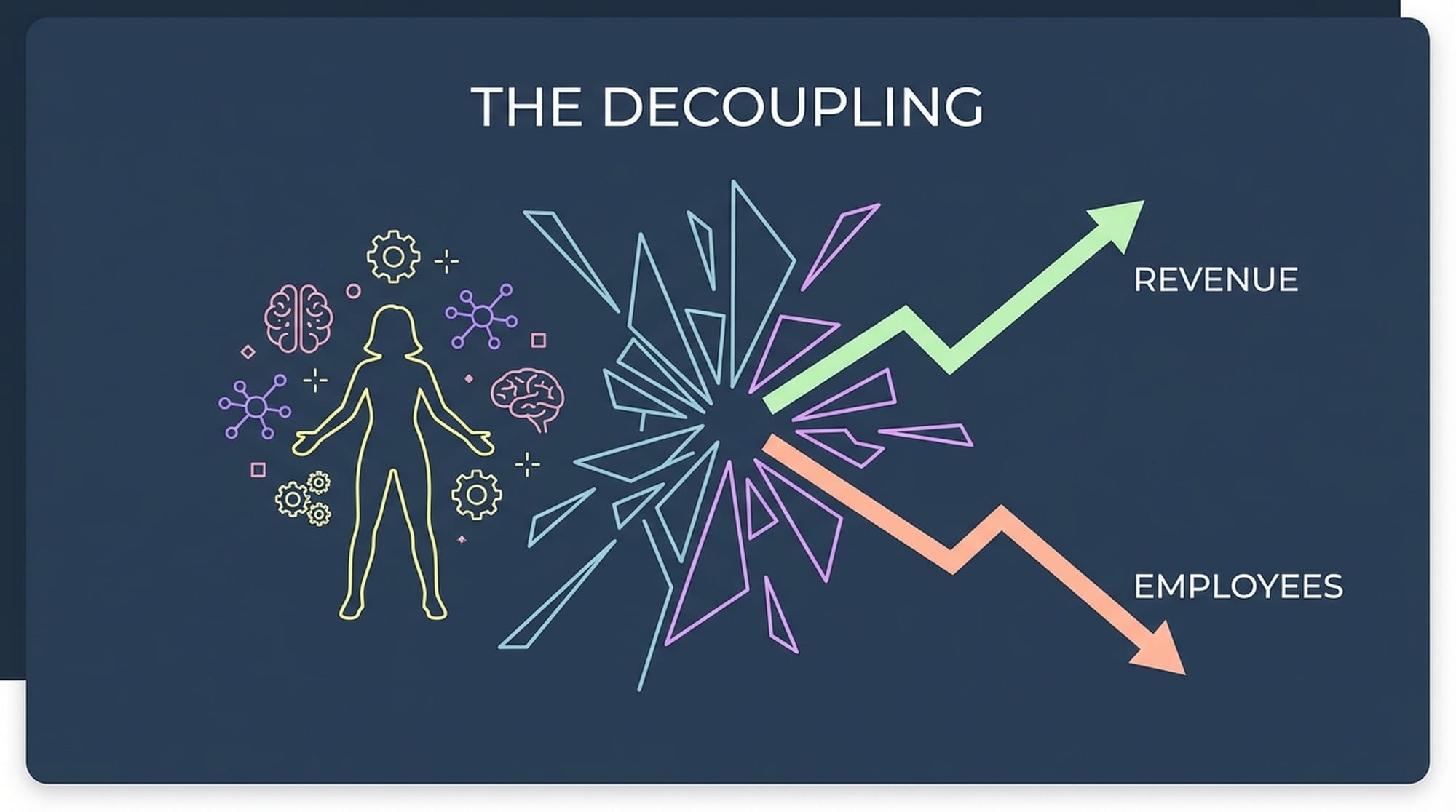
Imagine a single individual, empowered by advanced artificial intelligence, achieving what once demanded an entire organization. This isn't science fiction; it's the dawning of the "Solo Capitalist Revolution." By 2026, the concept of a multi-million dollar company run by just one person is not merely a possibility but a structural inevitability.
The 1000x Cost Collapse: Fueling the Revolution
The engine driving this monumental shift is what I term the 1000 times cost collapse. Consider the impact if the cost of electricity were to drop to an almost negligible fraction of a penny. This radical reduction would trigger an explosion of new industries and innovations. Similarly, something analogous is occurring with cognitive labor. The marginal cost of thinking, creating, and coordinating—the very essence of work—is plummeting towards zero.
"The marginal cost of thinking, creating, coordinating – the very essence of work – is plummeting toward zero."
Let's look at some compelling figures:
The Economics of Content Creation
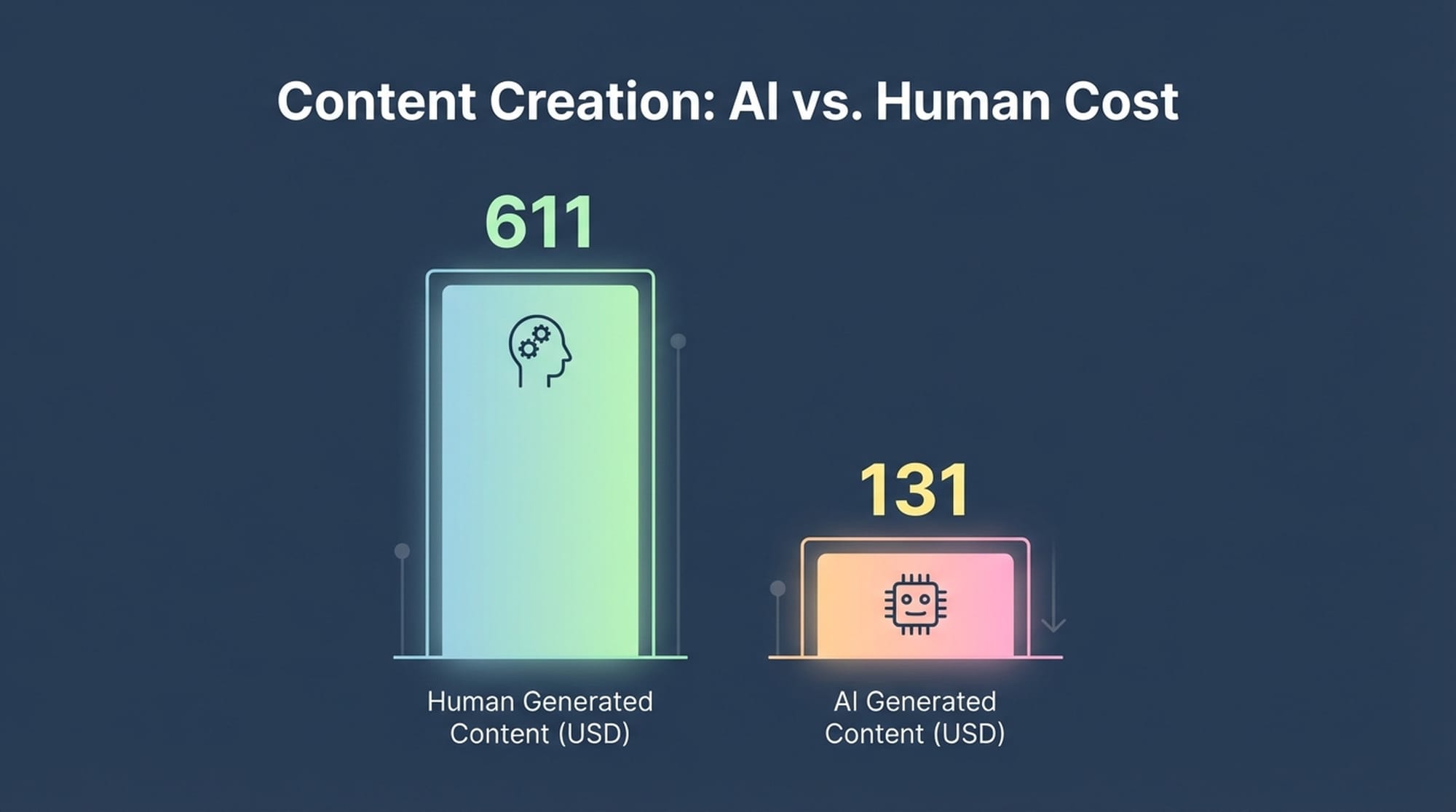
In 2025, an analysis revealed that AI-generated content is nearly five times cheaper than its human-generated counterpart.
- For a typical blog post:
- Human-generated:
$611 - AI-generated:
$131
- Human-generated:
- Remarkably, the raw cost of an AI call for content generation amounts to fractions of a cent.
This cost efficiency isn't limited to textual content. High-fidelity images, once requiring several hundred dollars for photographers and studio time, are now accessible through a simple monthly subscription to tools like Midjourney. Suddenly, your entire marketing engine can operate at a cost that is, statistically speaking, negligible.
Software Engineering Superpowers
The bedrock of modern tech firms, software engineering, is also undergoing a radical transformation. Tools such as GitHub Copilot and Cursor are enabling individual developers to achieve the code output equivalent to an entire engineering team from before 2022.
"AI assistance can reduce development time by 56% to 90% on complex tasks, effectively giving solo founders superpowers."
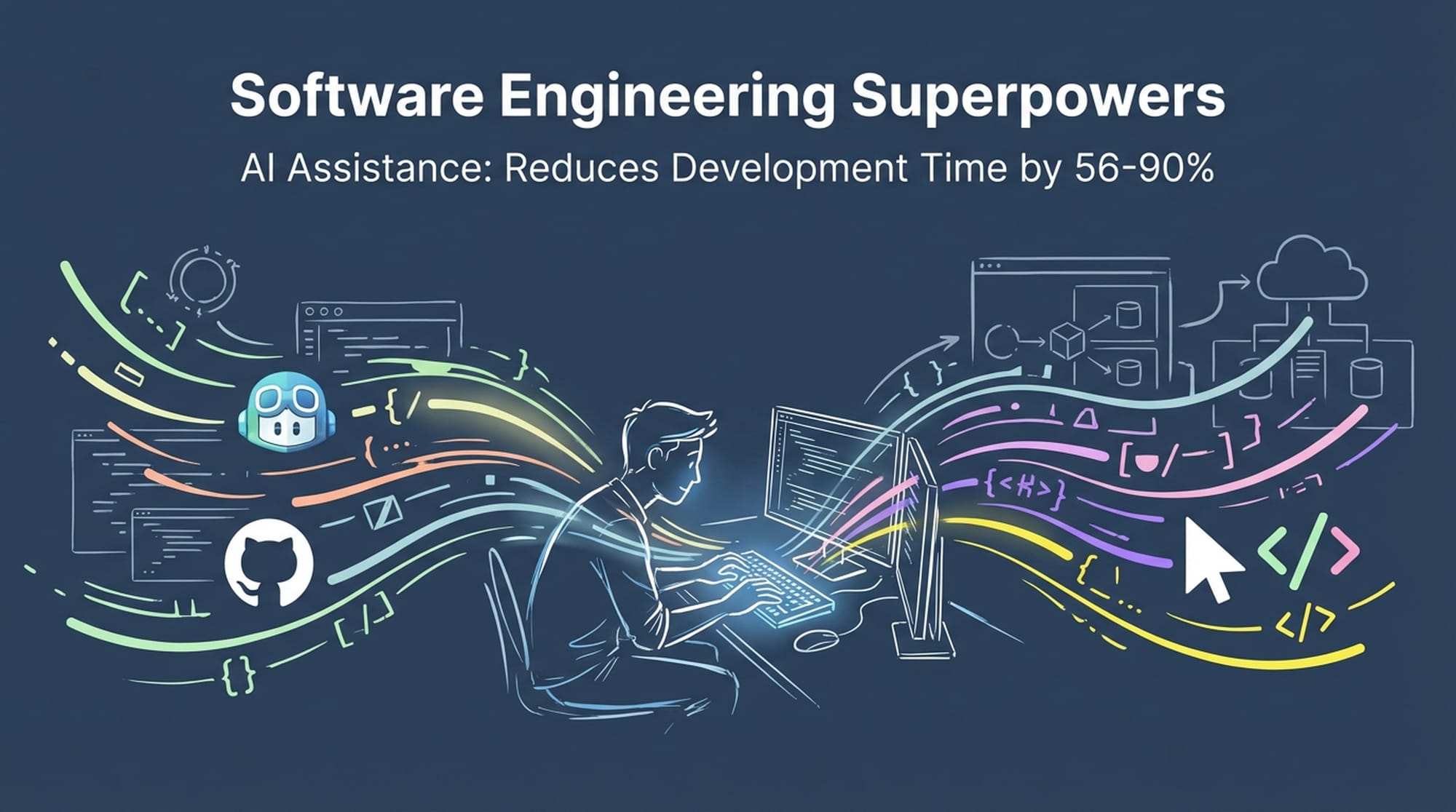
This means a solo founder can now wield capabilities that once demanded substantial human capital, profoundly altering the landscape of tech entrepreneurship.
The Rise of the Intelligence Utility
Major tech players are heavily investing billions into this "intelligence infrastructure." Google, for instance, aims to expand its capacity a thousandfold within the next 4-5 years to meet surging AI demand. This intense investment ensures that the intelligence utility—the foundational computational power underpinning these AI systems—is becoming progressively cheaper, more potent, and increasingly ubiquitous.
The Solo Billion-Dollar Question
The idea of a "one-person billion-dollar company" might seem far-fetched. Even Sam Altman, CEO of OpenAI, championed this concept, acknowledging its impossibility without AI. However, achieving a billion-dollar valuation typically involves tens of millions in annual recurring revenue. Reaching such figures with zero full-time employees remains an enormous feat.
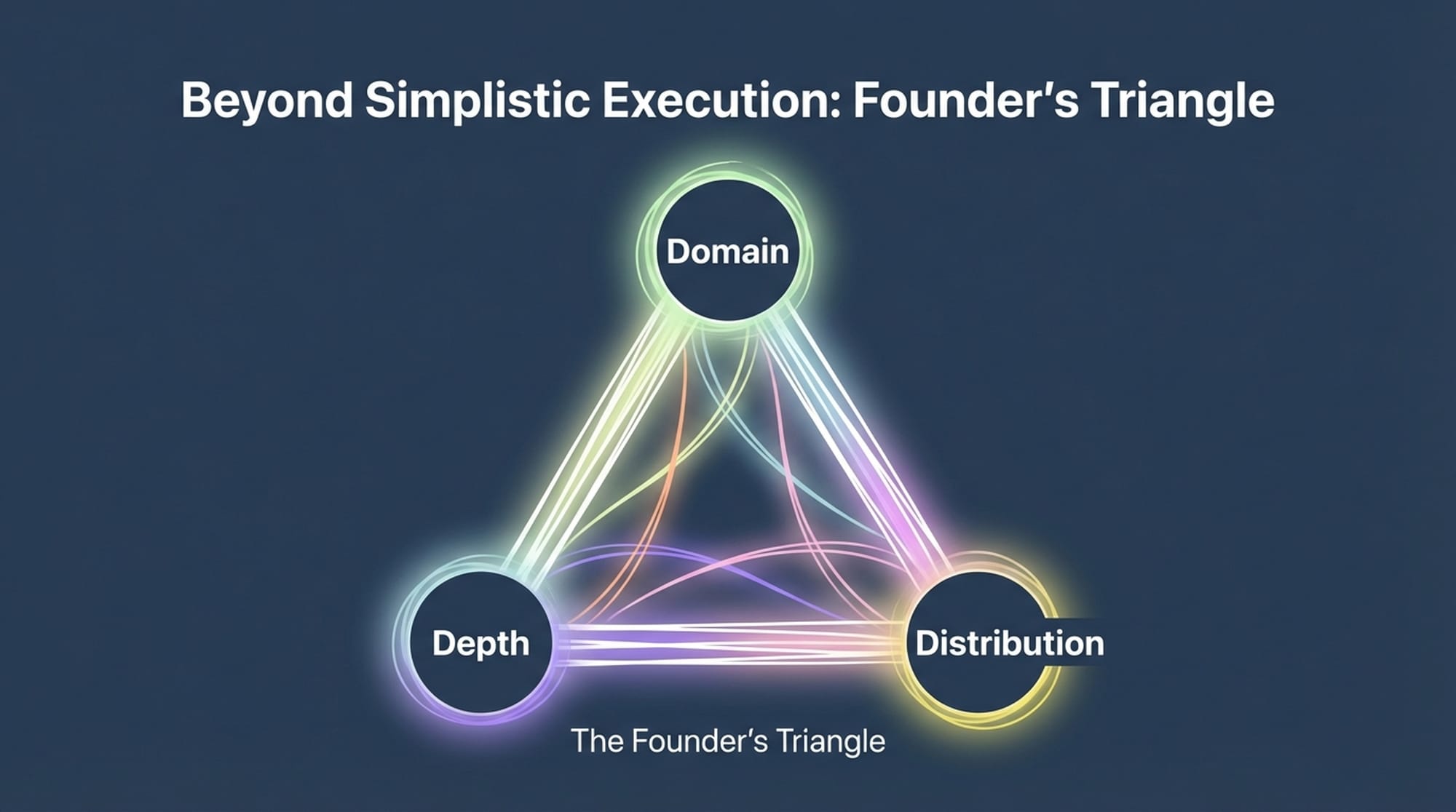
While the barrier to entry has significantly lowered, the barrier to success has simply shifted. In an environment where anyone can generate code and content, simple execution becomes increasingly commoditized. Success in this new paradigm hinges on what I refer to as the Founder's Triangle:
- Domain: Deep expertise and understanding of a specific niche.
- Depth: Profound integration and value within a customer's workflow.
- Distribution: An effective channel to reach and engage your target audience.
The DREAM Framework for Operationalizing Opportunity
To effectively navigate this macro opportunity, successful solo founders are adopting the DREAM framework:
- Demand: Strategies for lead generation and market identification.
- Revenue: Focusing on selling outcomes rather than time, via subscription or usage-based models.
- Engine: The core product or service, highly leveraged by AI.
- Admin: Automating back-office functions and operational tasks.
- Marketing: Building an authentic personal brand and distribution.
Each component of DREAM must be either automated or heavily augmented by AI to enable a single individual to operate at scale.
Building Your Moat: Defensibility in the AI Age
A crucial consideration for any solo capitalist is defensibility. If your product is merely a "wrapper" around an existing AI model—a superficial user interface passing prompts to an AI anyone can access—you lack a true structural advantage. In such cases, the cost of entry is low, and so is the cost of replication. This leads to rapid commoditization.
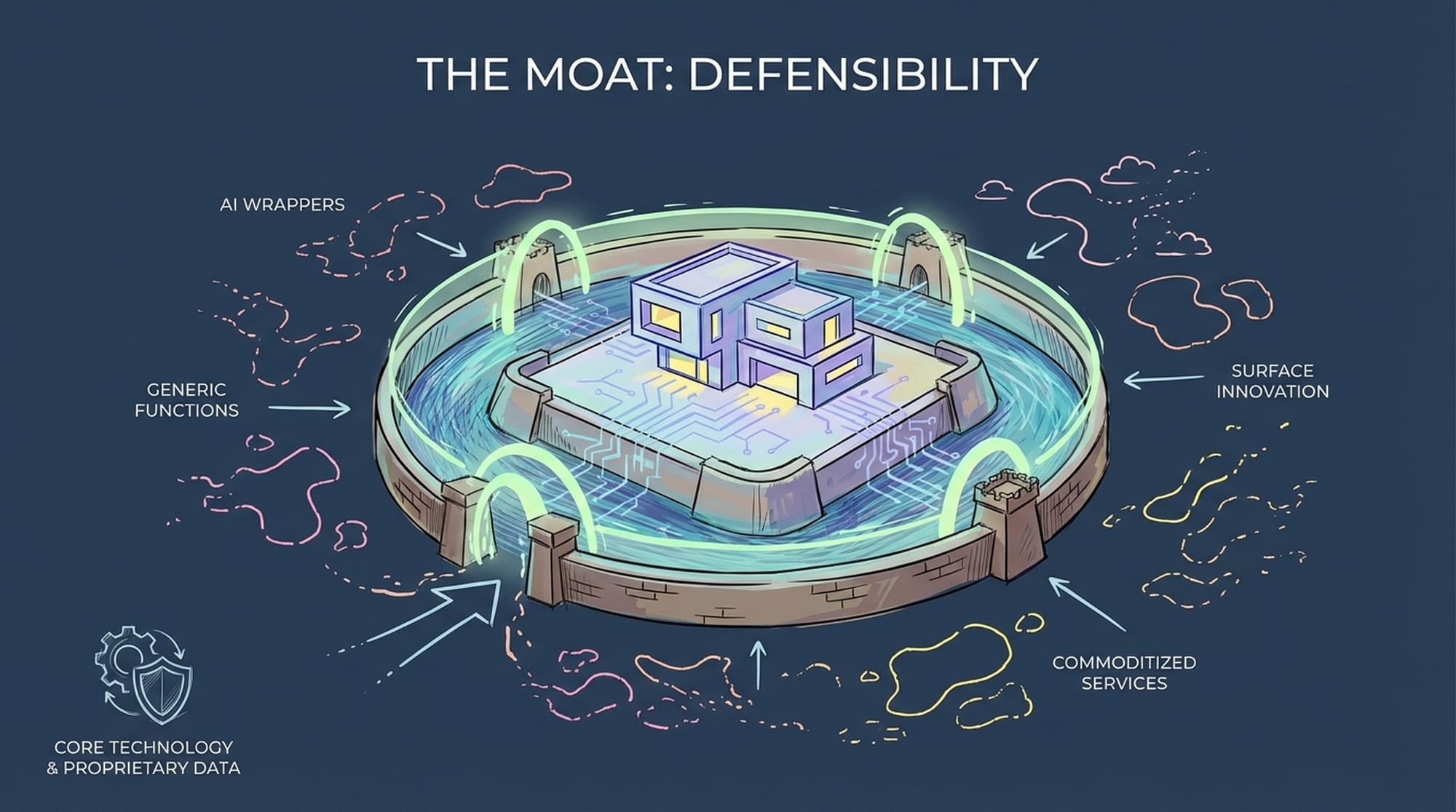
So, how does one build a genuine competitive moat?
- Counter-Positioning: Adopt a business model that incumbent players cannot easily replicate without jeopardizing their existing revenue streams.
- Workflow Depth (Integration Moat): Embed your AI solution deeply into the specific, messy, and complex workflows of your customers. The more intertwined your solution is with their daily operations, the harder it is to dislodge.
- Proprietary Data and Feedback Loops: The strongest moat in today's landscape is access to unique data that foundational models do not possess. This data, coupled with continuous feedback loops, allows for the creation of highly specialized and superior AI outcomes.
Real-World Solo Capitalist Archetypes
The theoretical underpinnings of solo capitalism are beautifully illustrated by real-world examples:
- Midjourney: This image generation platform generated over
$200 millionin annual recurring revenue (ARR) in 2023 with a relatively small team, showcasing the power of AI leverage. - Danny Postma: He built Headlime, which sold for approximately
$1 million. He now generates nearly$3.6 millionannually with subsequent ventures. - Pieter Levels: Renowned for platforms like PhotoAI and InteriorAI, Pieter achieves multi-million dollar ARR with a core team of one, supported by contractors and extensive automation.
These individuals demonstrate that the multi-million dollar solo enterprise is not an aspiration but an achievable reality today.
The Solo Illusion and Risks of Burnout
However, it's crucial to acknowledge the downsides. The "solo" label can be an illusion. Many seemingly one-person operations rely heavily on a network of contractors or specialized agencies. The psychological burden of managing this entire stack alone is immense, leading to:
- Isolation: A lack of peer interaction and support.
- Intense Decision Fatigue: The founder bears the weight of every single decision.
- Fragility: If the founder falls ill, the entire operation and revenue stream can halt.

The Commoditization of Intelligence
As the cost of intelligence approaches zero, the value captured by selling intelligence itself will also compress. If AI can generate code, marketing copy, or even legal contracts for pennies, businesses built solely on providing these outputs will see their margins evaporate. The market for generic "generation" is rapidly becoming a commodity. The value will shift to curation, verification, trust, and highly specialized application.
Navigating the Legal and Regulatory Minefield
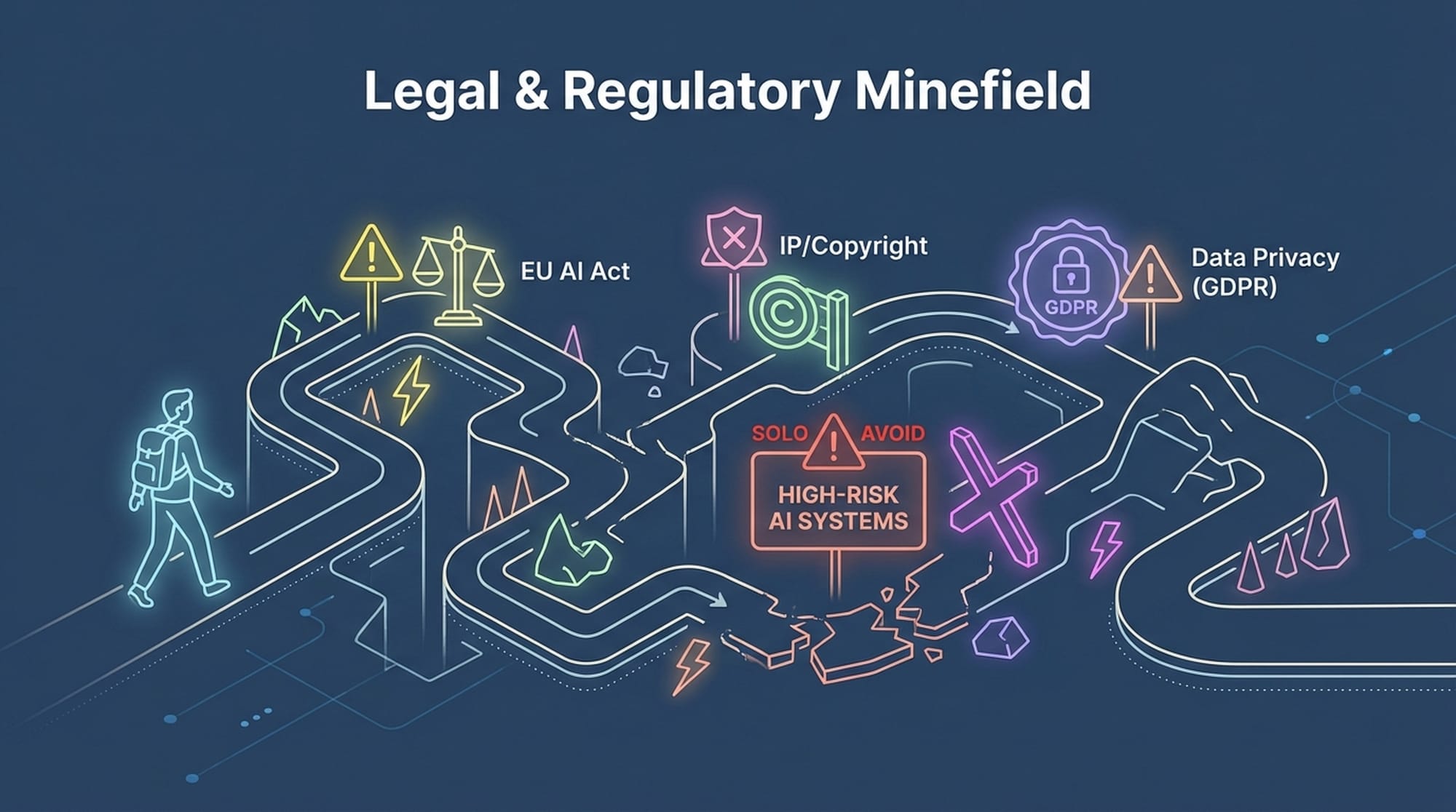
Perhaps the most significant threat to solo founders lies in the complex legal and regulatory landscape. Compliance burdens, particularly in regions like Europe and the United States (e.g., the EU AI Act, GDPR), can be fatal for a one-person operation lacking a dedicated legal department.
Solo founders should generally avoid building high-risk AI systems. Furthermore, the waters of intellectual property and copyright regarding AI-generated content remain murky, and stringent data privacy regulations like GDPR demand careful adherence.
The New Optimal: The Multi-Million Dollar Solo Capitalist
While the "one-person billion-dollar company" by 2026 remains unlikely, though possibly inevitable in the long term, the "one-person multi-million dollar business" is the actionable reality today. The technological infrastructure is already in place for a solo founder to generate anywhere from $1 million to $10 million in annual recurring revenue with profit margins exceeding 80%. This Solo Capitalist model represents a new, highly optimized point in the business landscape.
Strategic Prescription for Aspiring Solo Founders
My strategic prescription for the aspiring solo founder is clear and actionable:
- Don't build wrappers; build deep integrations into niche, often "boring" vertical workflows. This creates proprietary value.
- Don't sell time; sell outcomes via subscription or usage-based models. This aligns your incentives with customer value.
- Don't ignore the law; automate compliance where possible, but remain vigilant about liability and regulatory changes.
- Don't hide; build a personal brand that serves as your ultimate distribution moat against commoditized intelligence. Your unique perspective and trusted voice are invaluable.
The future of business is becoming smaller, faster, and undeniably smarter. The solo capitalist stands as the vanguard of this new economy, consistently demonstrating that in an age supercharged by AI, the ultimate and most irreplaceable leverage is, in fact, human judgment.
 |  |  |