
 |  |
The 2025 National Security Strategy: A Radical Paradigm Shift
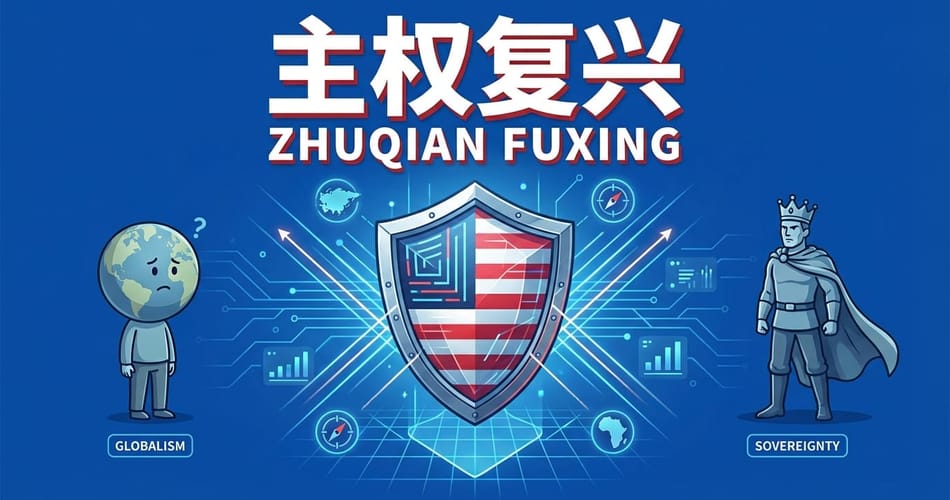
The year 2025 marks a pivotal moment in global geopolitics, ushered in by a document that promises to fundamentally reshape the world order: the 2025 National Security Strategy Report from the Trump administration. This isn't just another policy paper; it's a declaration, a mere thirty-three pages that represent the most radical paradigm shift in American foreign policy since the Cold War. At its core, this report is a comprehensive repudiation of the bipartisan foreign policy establishment that has guided the U.S. for the past three decades.
The report unequivocally states that the era of the U.S. playing "Atlas"—the Titan bearing the weight of the heavens on its shoulders—has ended. This signifies more than just a farewell to one epoch; it heralds the conclusion of an era and the unveiling of another, far more austere, period. What will this new era entail?
We will delve into this strategic report, which acts as a prism, refracting America's strategic landscape for the next decade and casting a profound influence on global affairs.
Redefining Core National Interests: From "Fantasy" to "Fortress"
The most striking aspect of this strategy is the redefinition of America's core national interests. Historically, U.S. interests were often intertwined with liberal internationalism, the promotion of democracy, and the maintenance of global commons. However, this report explicitly dismisses these as "fantasies," "wish lists," and "elite delusions."
The 2025 strategy abandons these notions, strictly defining American interests as three pillars:
- The security of the American homeland.
- The prosperity of the American economy.
- The preservation of American culture.
This shift signals America's transformation from a "global policeman" to a "super fortress"—a towering bastion solely focused on the confines of its own walls.
This is a strategy of defensive sovereignty, a return to the roots of extreme nationalism. It no longer concerns itself with the flourishing of democracy across the Pacific or humanitarian aid in Africa. Its singular focus is on strengthening America itself and ensuring that America First becomes its undeniable ultimate form.

The "Trump Corollary": The Western Hemisphere as a Strategic Priority
The most palpable manifestation of this transformation is the Trump Corollary. This isn't merely a reassertion of the Monroe Doctrine; it's an escalated version. While the Monroe Doctrine warned European powers against colonizing the Americas, and the Roosevelt Corollary asserted the U.S. right to intervene in Latin American internal affairs, the Trump Corollary goes further. It declares that the U.S. will use all available means to completely remove the military, intelligence, and economic influence of countries like China, Russia, and Iran from Latin America.
What does this mean in practice?
- Chinese infrastructure investments in South America, such as ports, 5G networks, and space observation stations, will no longer be viewed as normal commercial activities.
- They are explicitly designated as infringements on core U.S. security interests.
- The U.S. will no longer tolerate foreign ownership of
strategic assets.
The Western Hemisphere is transitioning from America's "backyard" to its "front line," becoming the absolute focal point of U.S. strategy.
To achieve this, the U.S. proposes a recruit and expand strategy. Naval and Coast Guard resources will be redirected from other theaters back to the Western Hemisphere, intensifying control over the Caribbean and the Eastern Pacific. Economically, it will promote nearshoring of supply chains, using tariffs to compel Latin American countries to choose between U.S. and Chinese supply chains. Politically, it will recruit right-wing, anti-socialist governments in the region, molding them into regional proxies. This highly militarized, politically polarized approach risks plunging Latin America back into instability.
Furthermore, the report securitizes immigration, defining large-scale migration as "destabilizing social flow" that must be "stopped," not merely "orderly managed." This implies the militarization of U.S. border policy, deploying active military personnel for border patrols, and pressuring transit countries to act as strategic buffer zones.
The Fracturing of the Atlantic Alliance: The "Hague Commitment"
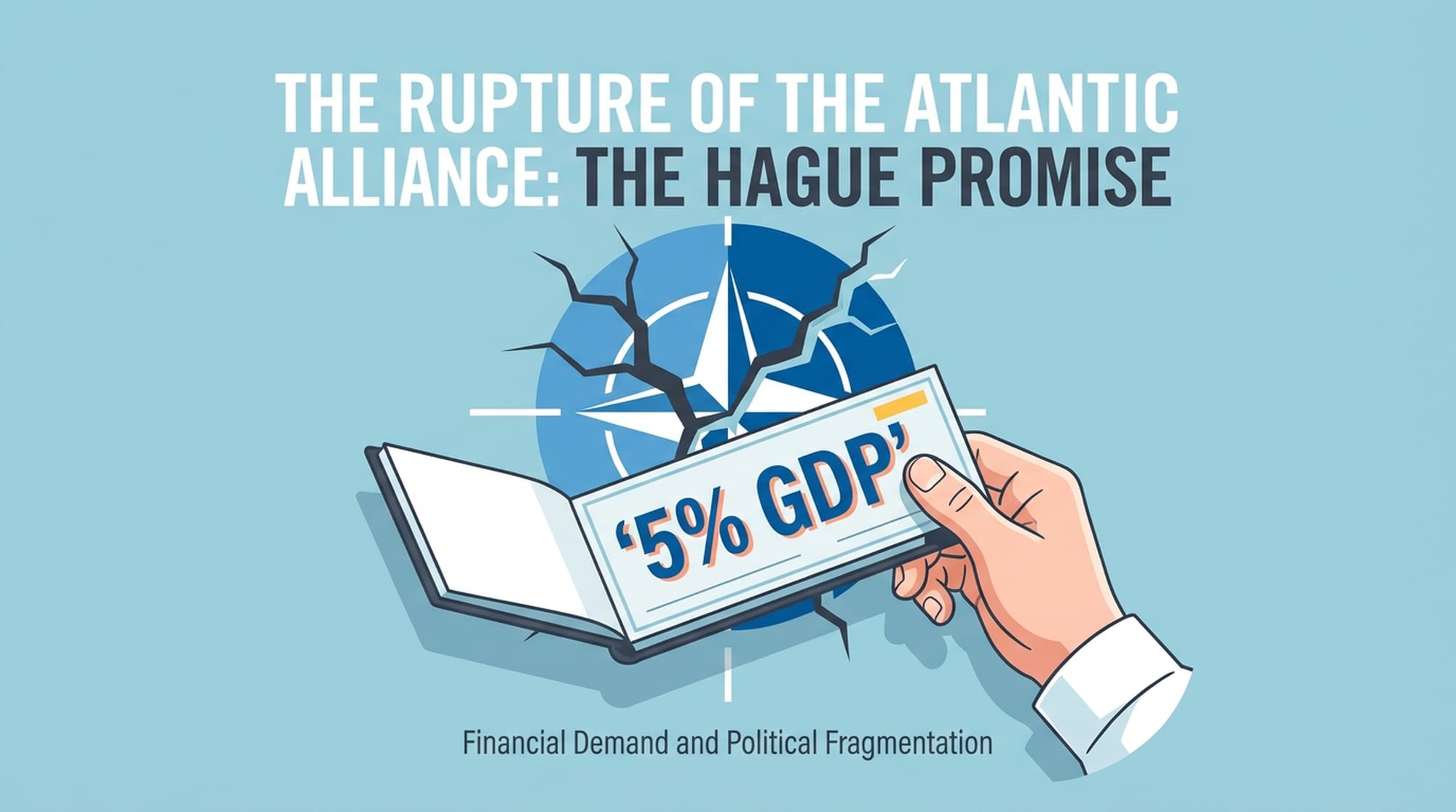
The report delivers a shockwave to European allies: the Hague Commitment. The U.S. demands that NATO members increase their defense spending to five percent of GDP. To put this in perspective, most NATO members currently barely meet two percent. Germany is at 2.1%, and France is similar. Requiring 5% means Germany's annual defense budget would skyrocket from 90 billion euros to over 200 billion euros. This would necessitate drastic cuts to social welfare and education, or massive debt accumulation.
Analysts widely believe this target is designed not for Europe to achieve, but for Europe to fail. Should European nations fall short, the Trump administration gains the moral high ground to accuse allies of "defaulting," thereby justifying a reduction in defense commitments to Europe, or even the withdrawal of U.S. troops.
The report explicitly states, "The days of America supporting the entire world order like Atlas are over." This foreshadows NATO's collective defense clause becoming a transactional form of protection—only members who pay the 5% fee will receive it.
More provocatively, the strategy views Europe through the lens of civilizational decline. It posits that Europe faces a "civilizational erasure" crisis, attributed to low birth rates, social fragmentation from immigration, and EU bureaucracy suppressing free speech and economic vitality. The report even suggests that the U.S. should "cultivate resistance forces" within Europe. This means Washington would bypass Brussels and traditional Western European liberal governments, directly engaging with nationalist conservative parties in countries like Hungary and Poland, and even supporting anti-establishment forces within Western Europe. This effectively weaponizes U.S. foreign policy to dismantle the political cohesion of the EU.
Regarding the Ukraine war, the strategy's core objective is the rapid cessation of hostilities. The report argues that the war harms the U.S. economy through energy and food price volatility, that Europe has sufficient population and economic strength to contain Russia without sustained U.S. aid, and that ending the war is the first step in driving a wedge between China and Russia. The report implies that the U.S. will leverage its military aid to Ukraine to compel Kyiv to the negotiating table, accepting some form of status quo freeze. For Ukraine and the Baltic states, this would be a geopolitical nightmare, tantamount to abandonment.
Indo-Pacific Strategy: China, an "Existential Threat"
Moving to the Indo-Pacific, China's designation has escalated from "competitor" to an existential threat. While the Biden administration already viewed China as a "pacing challenge," the 2025 Trump strategy elevates this confrontation to an existential level. The report accuses China not only of challenging the international order but also of "continuously harming the U.S. economy" through predatory trade practices.
This signifies an escalation of strategic means: economic warfare will become a form of defense. The report unabashedly embraces protectionism, vowing to achieve the full reshoring of critical industries through tariffs and non-tariff barriers. This isn't just about jobs; it's about securing an independent industrial base in wartime.
Technologically, the U.S. will establish a tech iron curtain, not only maintaining leadership but also "protecting intellectual property from foreign theft" through stringent export controls and counter-espionage operations. This foreshadows harsher scrutiny for Chinese researchers and students, with technological exchange facing near-complete disruption.
On the Taiwan issue, the U.S. will maintain the appearance of a One China policy, but its substantive goal is to build military capabilities capable of deterring any aggression within the First Island Chain. Taiwan's semiconductor industry is explicitly listed as a core interest vital to the U.S. economic lifeline, meaning the motivation to protect Taiwan stems more from economic security than from democratic values.
India, once considered the "most important strategic partner," sees a subtle shift in its status. The new strategy seeks to "conscript" India to prevent any single nation from dominating Asia, but this cooperation is based on mutual interest, not shared values. The report implies that India cannot merely enjoy the security environment provided by the U.S. but must make substantial contributions. If India maintains high trade barriers or wavers on Russia, it could face U.S. pressure. India is viewed as a diplomatic challenge to be "managed," rather than a natural ally.
For traditional allies like Australia, Japan, and South Korea, the U.S. demand is also burden-sharing. The U.S. will require Japan, South Korea, and Australia to bear the primary costs of defense in the First Island Chain. Japan, in particular, may be pressed to further exceed its pacifist constitutional limits, becoming a militarily normalized state with offensive capabilities to backfill the shrinking U.S. forces.
Middle East and Africa: Strategic Retrenchment
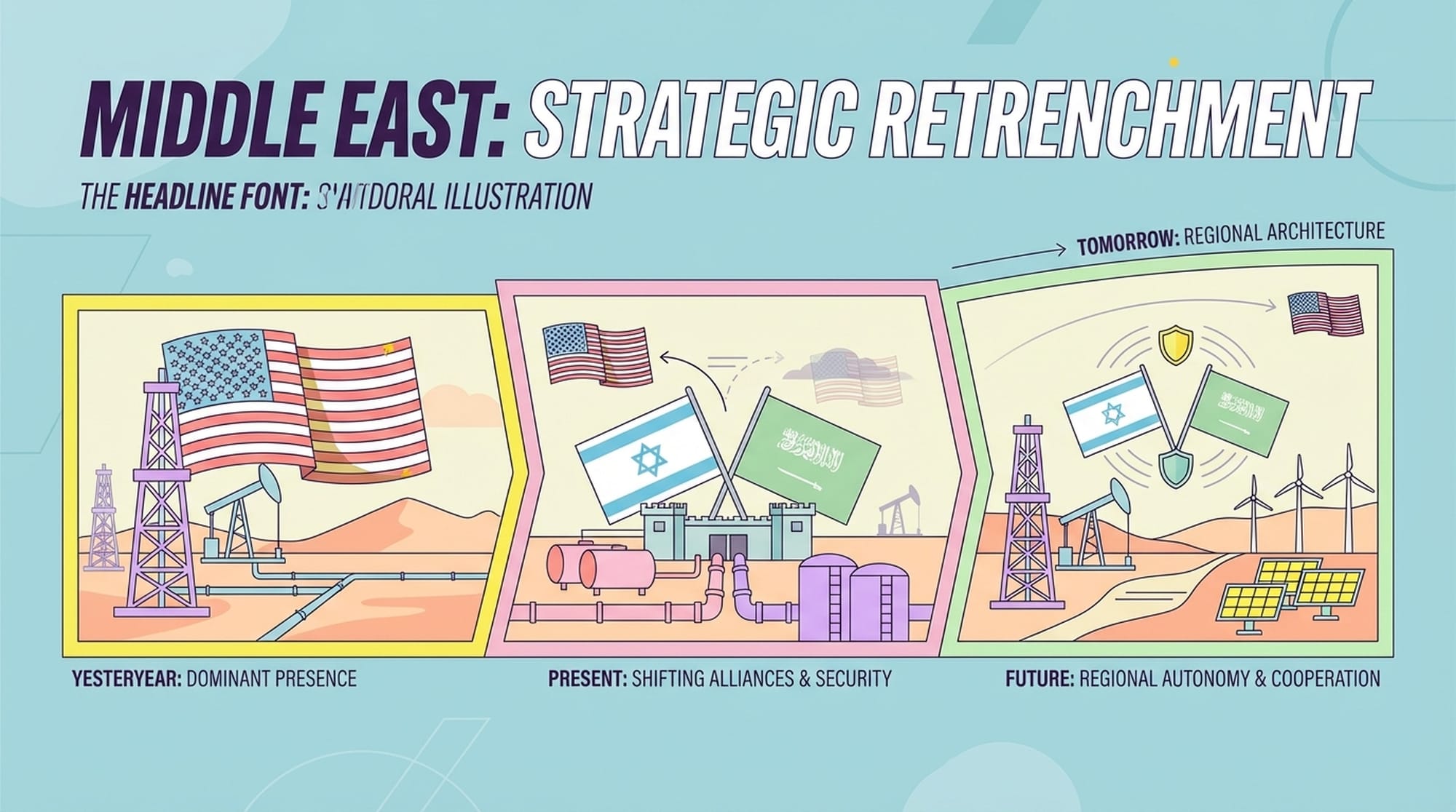
In the Middle East and Africa, the strategy signals a marked strategic retrenchment. The Middle East objective is minimalist: prevent any hostile power, primarily Iran, from controlling the region's oil and gas, while avoiding "forever wars." The report assumes Iran has been weakened by Israeli actions and a hypothetical U.S. "midnight hammer operation." Based on this, the U.S. believes it can reduce its conventional military presence in the Middle East, relying instead on Israel and Gulf Arab states to maintain regional balance. As the U.S. pursues "energy dominance," the importance of Middle Eastern oil to the U.S. declines, and U.S. engagement in the region will be strictly limited to counter-terrorism and non-proliferation at a minimum.
Africa, receiving very limited attention in the report, is largely discussed in relation to critical minerals. This reflects a shift in U.S. focus from development aid to a resource scramble. With significant cuts to foreign aid, African nations will face severe funding shortages, potentially creating an opening for China and Russia to expand their influence.
The "Golden Shield" and Defense Industrial Revitalization
The most futuristic yet concrete military commitment in the report is the establishment of a Golden Shield missile defense system to protect the U.S. homeland. This marks a shift in U.S. nuclear strategy from Mutually Assured Destruction to unilateral survival. If the U.S. believes it can intercept most incoming missiles, its hesitation in using force would greatly diminish, potentially destabilizing global strategic equilibrium.
Learning from ammunition shortages in the Ukraine war, the strategy prioritizes the revitalization of the defense industrial base as a top economic priority. The U.S. military will move from pursuing expensive, sophisticated "boutique weapons" to mass-producing low-cost, lethal drone systems and ammunition. Defense supply chains must be fully reshored to the U.S. or its allies (primarily in the Western Hemisphere) to eliminate wartime supply risks.
The U.S. vows to maintain "the most powerful, credible, and modern nuclear deterrent in the world." Combined with an emphasis on space and cyber capabilities, the U.S. seeks overkill capacity across all domains, not merely parity.
Biden vs. Trump: A Destructive Contrast
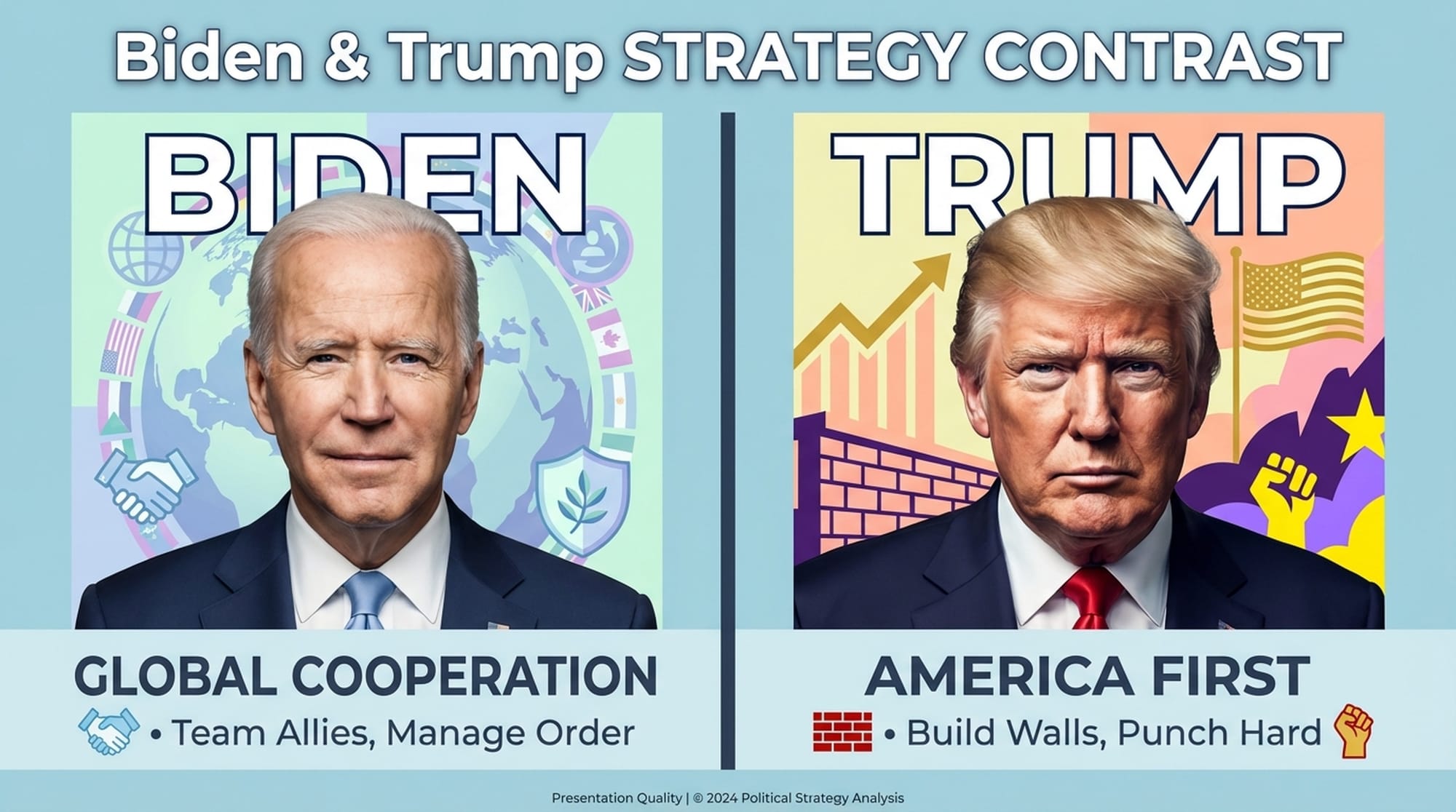
Comparing this to the Biden administration's 2022 National Security Strategy reveals a complete subversion. The 2022 strategy sought to "manage" global order through allied unity, whereas the 2025 strategy aims to isolate global chaos through "wall-building" and "heavy punches," establishing absolute U.S. hegemony in the Western Hemisphere and precisely harvesting interests globally. This portrays a colder, more unpredictable America.
The 2025 National Security Strategy outlines an America no longer interested in maintaining a rules-based international order, believing it has been hollowed out by free-riding allies and opportunistic adversaries. Instead, it presents a New Hamiltonian America: domestically, rebuilding manufacturing through trade protectionism and preserving cultural homogeneity through anti-immigration policies. Internationally, it seeks to avoid war through powerful military deterrence but will not hesitate to use overwhelming force when its core interests are threatened.
Implications for China: Challenges and Unforeseen Opportunities
What does this report mean for China? The severe challenges are evident:
- Economic decoupling will accelerate.
- Tariff wars will become normalized.
- The U.S. market will increasingly close to Chinese goods.
- Technological blockades will evolve from "small yards with high fences" to "large compounds with deep moats."
- America's aggressive posture in the Western Hemisphere will directly impact China's
Belt and Roadinitiatives in Latin America, potentially exposing Chinese assets in the Americas to political risk. - The Taiwan issue will become more militarized; while the U.S. may reduce political provocations, it will rapidly enhance Taiwan's defensive capabilities, significantly increasing the military cost of reunification.
However, within these seemingly formidable challenges, counter-intuitive opportunities may arise. The U.S.'s humiliating attitude towards Europe—from the 5% spending demand to civilizational critiques—will compel Europe to seek strategic autonomy. If China can offer stable markets and diplomatic support, Sino-European relations could enter a window of improvement. Concurrently, America's blatant "America First" stance and aid cuts may alienate African, Southeast Asian, and Middle Eastern countries, making them more receptive to strengthening South-South cooperation with China.
Finally, as the U.S. abandons value promotion and embraces exclusionary nationalism, its moral appeal as a "beacon" will significantly diminish. This creates a contrasting space for China's concept of a Community with a Shared Future for Mankind, allowing the world to more clearly discern two different developmental paths.
The year 2025 marks America's formal entry into a phase of defensive hegemony. It no longer seeks to change the world but to ensure, through extreme self-protective measures, that it remains the "strongest, wealthiest, and most successful" fortress amidst global transformation. For the rest of the world, adapting to an "angry and selfish" America will be the core diplomatic challenge of the next decade. We are entering an era of immense uncertainty and challenges, yet also one ripe with opportunities to redefine the global order.
 |  |