 |  |  |  |
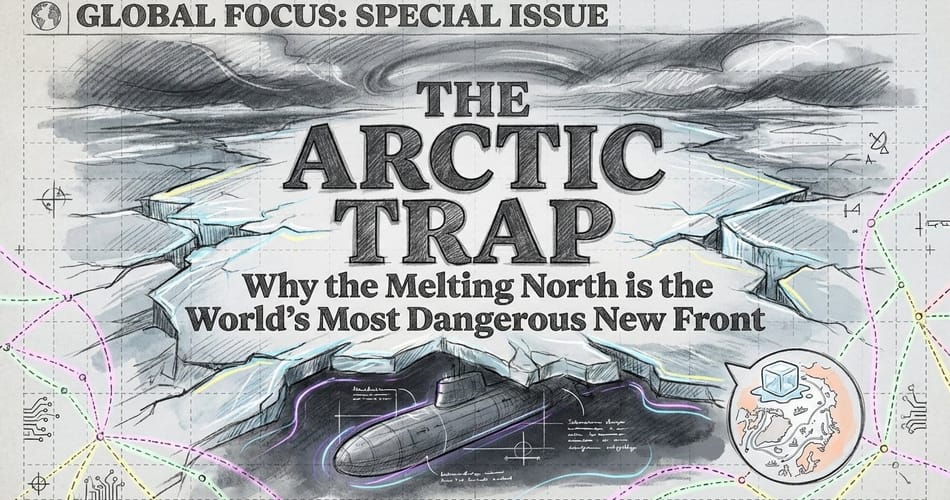
For nearly a century, the Arctic was a realm defined by its profound silence. A vast, frozen expanse where the dominant sounds were the creaking of ice and the relentless howl of the wind. This formidable environment led military strategists and world leaders to label the North Pole a "Peace Special Zone," deeming it too cold, too harsh, and too desolate for conflict. The prevailing ethos was "High North, Low Tension."
Today, however, that silence has been shattered. It's being replaced by the resonant hum of nuclear-powered vessels, the mysterious ping of clandestine sonar, and the unsettling snip of underwater cables. We are witnessing a profound transformation in this once-pristine region, a shift that carries grave geopolitical implications.
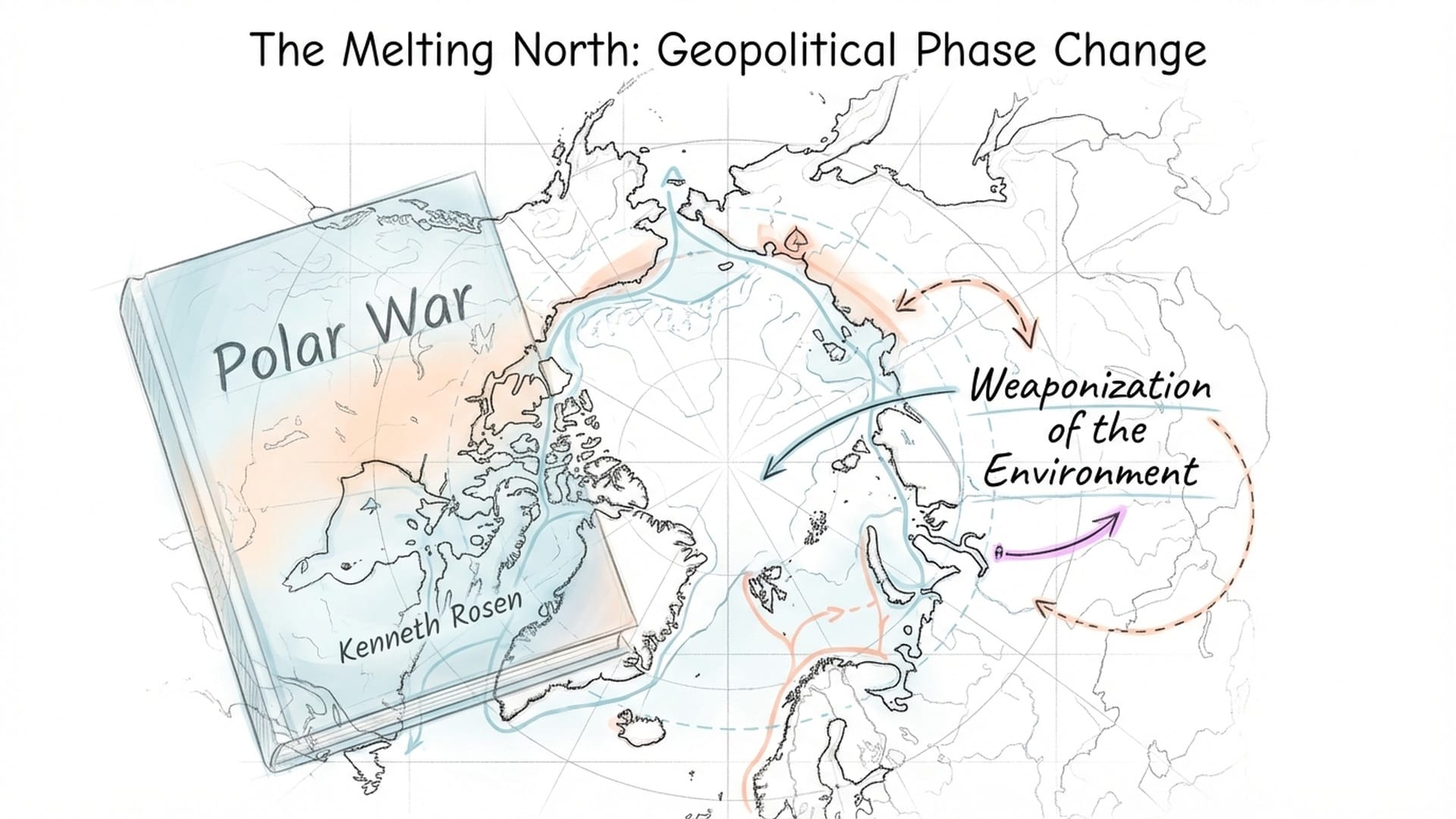
Drawing insights from Kenneth Rosen's compelling 2026 work, Polar War, a stark warning emerges: we are experiencing the "weaponization of the environment." Rosen, a seasoned war correspondent, argues that the melting of Arctic ice is not merely an ecological catastrophe; it represents a geopolitical "phase change." As the ice recedes, it strips away the northern hemisphere's natural defensive barriers, exposing a new vulnerability to aggression and igniting what he terms "Resource War 2.0."
The melting Arctic isn't just an ecological disaster; it's a geopolitical "phase change," exposing new vulnerabilities and sparking "Resource War 2.0."
The West's Strategic Slumber and Russia's Resurgence
For three decades following the Cold War, the West largely succumbed to a "strategic slumber." While nations like the United States allowed their icebreaker fleets to decline and polar bases to crumble, Moscow was strategically rebuilding. Russia revitalized its Northern Fleet, reopened Soviet-era outposts, and even symbolically staked its claim with titanium flags on the seabed. Simultaneously, China, despite its geographical distance, declared itself a "Near-Arctic State," investing billions into what it refers to as the "Polar Silk Road."
How do you defend a frontier that is literally disappearing beneath your feet? This is the critical question facing global powers today. Rosen's investigation identifies three core pillars driving this new era of conflict.
While Washington let its icebreaker fleet rot, Moscow was rebuilding its Northern Fleet and planting titanium flags on the seabed.
Pillar 1: The New Global Trade Routes
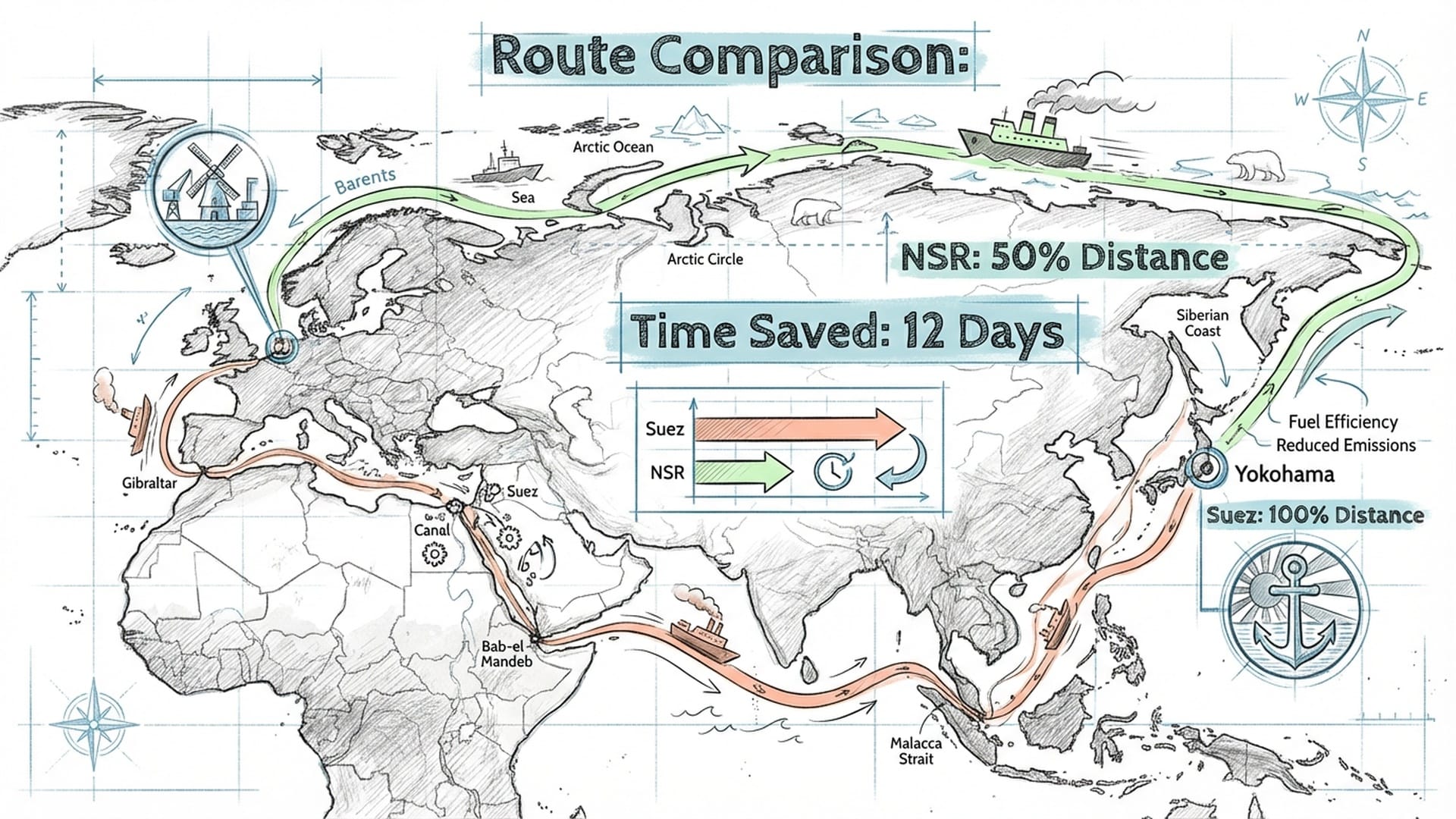
The first pillar is the dramatic shift in global trade routes. For over a century, the Suez Canal has been a vital artery of international commerce. However, as Arctic ice thins, the Northern Sea Route (NSR) along Russia's coast is emerging as the "Golden Waterway." Shipping data from 2026 reveals that journeys from Yokohama to Rotterdam via the Arctic are 50% shorter than those through Suez, slashing twelve days off transit times. In the realm of "just-in-time" logistics, twelve days is an immense saving, translating into millions of dollars in fuel and inventory costs.
The Russian "Supply Chain Valve"
However, this Arctic shortcut comes with significant caveats. The NSR is not treated as open international waters; Russia considers it an internal highway. Moscow asserts its right to provide pilots, levy substantial fees, and deny passage to "unfriendly nations." Rosen warns that Russia is effectively constructing a "global supply chain valve," dictating that access to this faster route requires adherence to their rules.
The Chinese Wedge: Science or Espionage?
Adding another layer of complexity is the "Chinese Wedge." Beijing's involvement extends beyond mere cargo shipments; it encompasses substantial investments in future infrastructure. This includes building deep-water ports in the Russian Arctic and conducting "scientific research" that bears a striking resemblance to military reconnaissance. Rosen highlights Chinese research stations in locations like Svalbard, ostensibly studying the Northern Lights, but simultaneously gathering water-sound data and meticulously mapping the seabed. This data is critical for submarine warfare, suggesting a "Trojan Horse" strategy where scientific endeavors mask preparations for future conflict.
Beijing's 'scientific research' in the Arctic, like collecting water-sound data and mapping the seabed, looks a lot like military scouting. This is the 'Trojan Horse' strategy at play.
Pillar 2: The Hidden War Beneath the Waves
While the world focuses on the visible melting of ice, the true perils often lie hidden in the ocean deep. Our modern world is interconnected by "digital veins"—the undersea fiber-optic cables that ferry 95% of all internet traffic and trillions in daily financial transactions. In the Arctic, these cables represent the "soft underbelly" of Western infrastructure.
Rosen introduces us to G.U.G.I.—the Russian Main Directorate of Deep-Sea Research. This shadowy organization, reporting directly to the Kremlin rather than the navy, operates vessels like the Yantar. This "research ship" is equipped with advanced deep-sea submersibles and robotic arms, capable of intricate underwater operations.
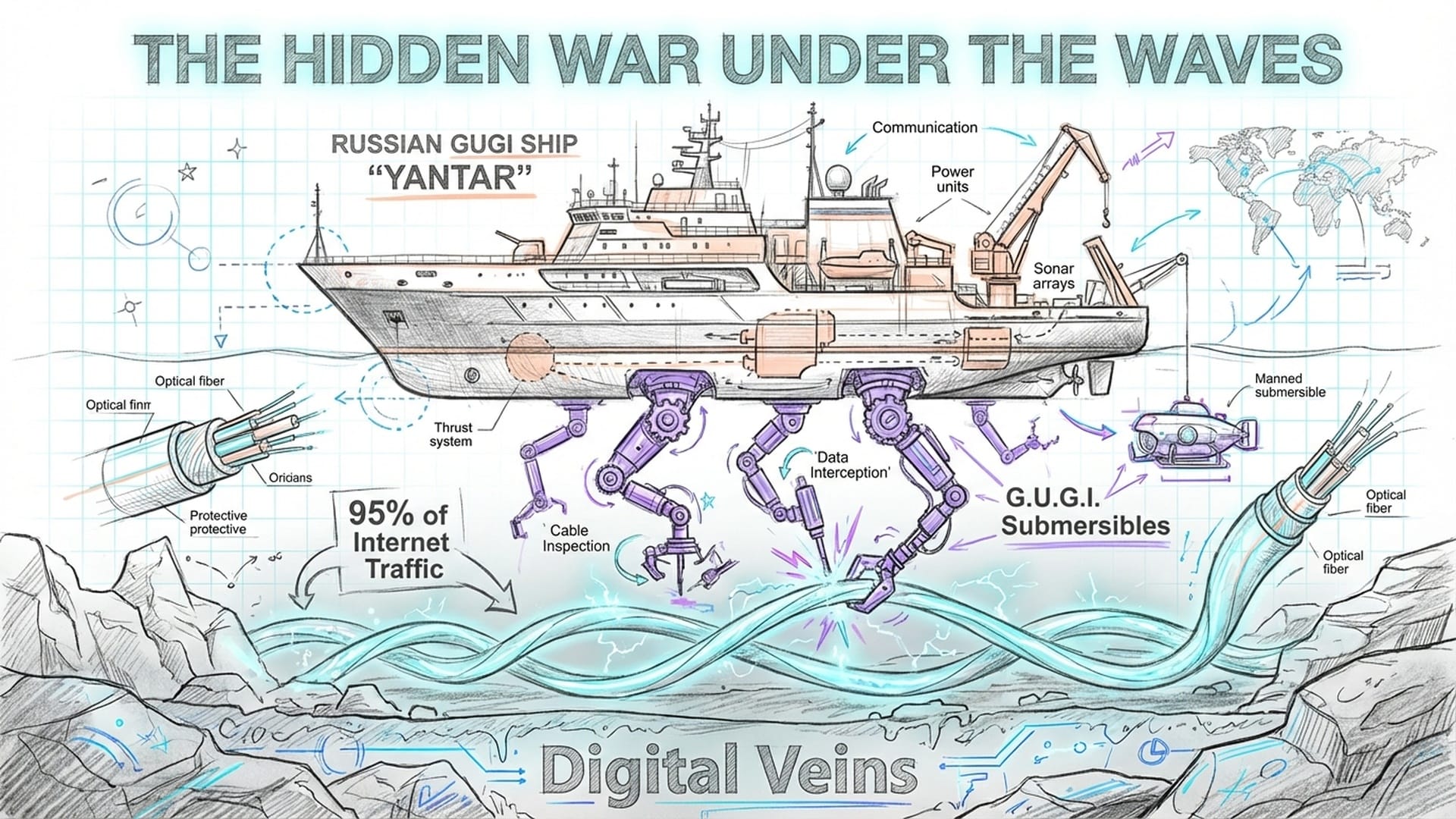
The precision required for such operations is astonishing. These robots can descend kilometers into the abyssal darkness to locate incredibly thin cables, barely thicker than a garden hose, buried in the silt. They don't simply cut them—an action that would be too overt and traceable. Instead, they can install "induction collars" that intercept data without severing the physical connection. This represents a "Deep Sea Iron Curtain," not designed to block people, but to hijack the very flow of information. It's the ultimate "gray zone" weapon: if financial servers go dark or GPS systems fail, it becomes impossible to discern a mere glitch from an act of war. In the Arctic, such ambiguity serves as a powerful strategic tool.
The ultimate "gray zone" weapon: installing "induction collars" to intercept data from undersea cables without breaking them. Was it a glitch, or an act of war? In the Arctic, you may never know.
Pillar 3: The Revenge of Geography
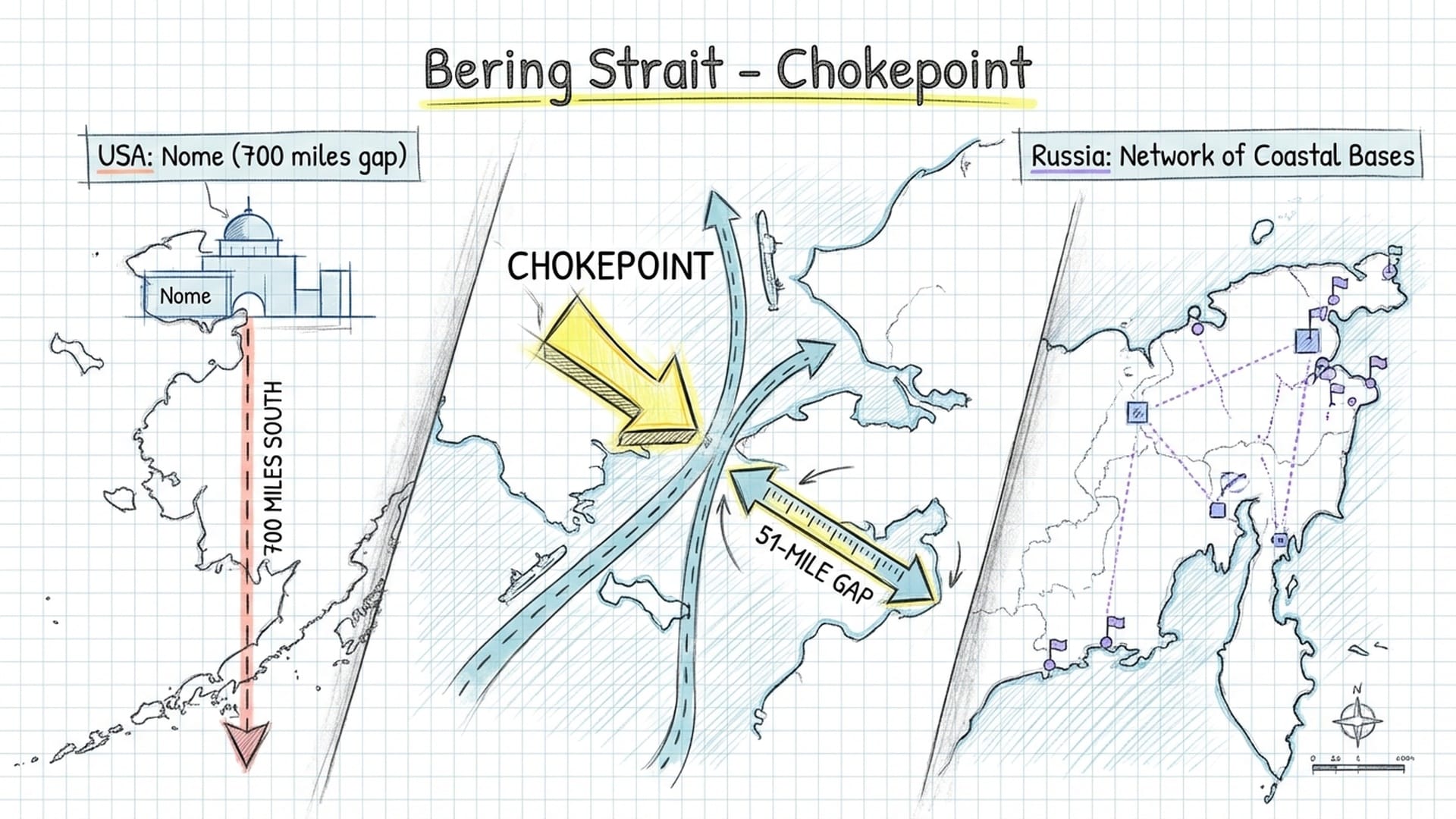
The third pillar is what Rosen aptly names the "Revenge of Geography." As ice masses recede, historically challenging passages are transforming into critical strategic chokepoints. A prime example is the Bering Strait—the mere 51-mile gap separating Alaska and Russia. This narrow passage is poised to become the new "Gibraltar," funneling every ship, submarine, and drone entering or exiting the Arctic from the Pacific.
The alarming reality is the significant disparity in infrastructure. The nearest American deep-water port is a staggering 700 miles south of the strait. Were a crisis to erupt tomorrow, the U.S. Coast Guard would require days to respond effectively. Russia, conversely, boasts a network of well-established bases directly on the water's edge. Rosen characterizes the port of Nome, Alaska, not merely as a town, but as a "geostrategic emergency." Upgrading Nome into a functional deep-water naval base is no longer a localized project; it is a national security imperative.
The GIUK Gap and Russia's Fortress Strategy
On the opposite side of the pole lies the G.I.U.K. gap—the strategic expanse between Greenland, Iceland, and the United Kingdom. During the Cold War, this region was a primary hunting ground for NATO forces tracking Soviet submarines. Today, the "Bastion Strategy" has made a potent return. Russia is not just attempting to bypass NATO; it is actively transforming the Barents and Norwegian Seas into "fortresses" safeguarded by hypersonic missiles. The objective is clear: to completely deny NATO access to the North.
The Icebreaker Asymmetry and a Glimmer of Hope
Rosen's detailed analysis serves as a chilling "indictment of Western strategic failure," yet it also provides a crucial roadmap for "industrial mobilization." The most pronounced disparity lies in what he terms the "Icebreaker Asymmetry"—a brutal numbers game.
As of 2026, the United States operates with merely two aging polar icebreakers, the Polar Star and the Healy, both long past their operational prime. In stark contrast, Russia possesses over 40 icebreakers, including formidable nuclear-powered vessels capable of effortlessly cleaving through ice three meters thick.
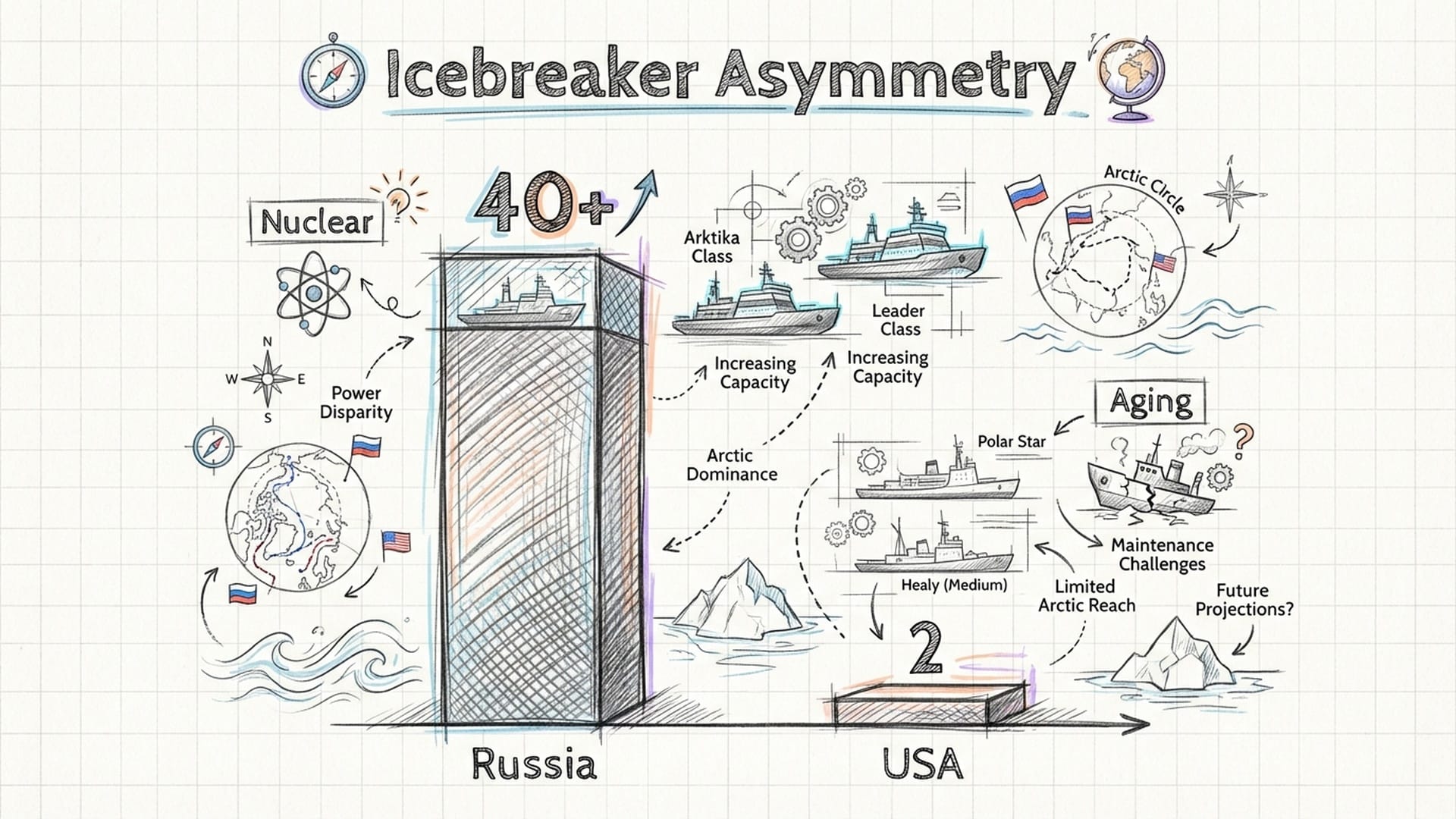
In the Arctic, an icebreaker transcends its role as a mere vessel; it is a physical embodiment of sovereignty. Without the ability to navigate its own waters, a nation cannot effectively perform search and rescue operations, enforce its laws, or project power.
Despite this imbalance, a faint glimmer of hope has emerged. In late 2025, the landmark "ICE Pact" was signed. This agreement sees the U.S. sidestepping its own overburdened shipyards to forge partnerships with Finland and Canada. Finland, renowned for its cutting-edge icebreaker technology, will collaborate with its allies to finally construct a fleet capable of rivaling Moscow's. This "transatlantic industrial shield" is a critical step, though the reality remains that ships take years to build.
In the interim, the conflict is rapidly escalating into the "electromagnetic spectrum." The Arctic, once a literal "communication black hole," is now the epicenter of a "Polar Satellite Race." New low-earth orbit constellations are being deployed to deliver high-bandwidth connectivity for drones and real-time battle management. Concurrently, "Trans-Polar" missile shields—advanced radar systems situated in Alaska and Scandinavia—are being deployed to counter hypersonic threats traversing the top of the world.
The Arctic's New Reality: A Threat Multiplier
Rosen's analysis converges on an inescapable truth: the Arctic "Power Play" is no longer a distant prognostication for 2050; it is a stark reality in 2026. We must fundamentally reframe our perception of climate change, recognizing it not solely as an environmental concern, but as a profound "threat multiplier" in the High North.
The melting ice creates a volatile "contact surface" between rival powers in a region bereft of established "rules of the road." The "Polar War" will not manifest as a conventional World War Two-era naval engagement. Instead, it will likely commence with a "quiet snip" of a critical underwater cable, a "research vessel" strategically refusing to yield its position, or a subtle GPS signal "glitch" that blinds a fleet amidst a blizzard.
The percussive beat of this escalating conflict grows louder with every iceberg that calves and crashes into the sea. We are within possibly the final window of opportunity to re-establish a credible balance of power in the Arctic. To fail in this endeavor would mean the "High North" will permanently abandon its silence, transforming into the very epicenter of a global storm.
 |  |  |  |