本文另有中文版 · This article is also available in Chinese: 中文版
It's 2 a.m. and your mind won't stop.
You're lying in bed. The room is dark, the house is quiet, and your body is tired enough that it should have surrendered to sleep an hour ago. But your mind didn't get the memo. It's replaying a conversation from Tuesday — the one where you said the wrong thing and watched someone's face change. It's drafting tomorrow's meeting in real time, running through scenarios like a chess engine that can't stop computing. It's wondering whether you locked the front door. Whether you paid the credit card.
Then, for about half a second, something shifts. You notice the thoughts. Not the content of them — but the fact that they're happening. For one disorienting moment you're not inside the stream of thought. You're watching it. You see the machinery churning, and you realize: I've been lying here for an hour, and I wasn't here for any of it.
Then the stream swallows you again. That half-second was the most important moment of your day. And you almost certainly missed it.
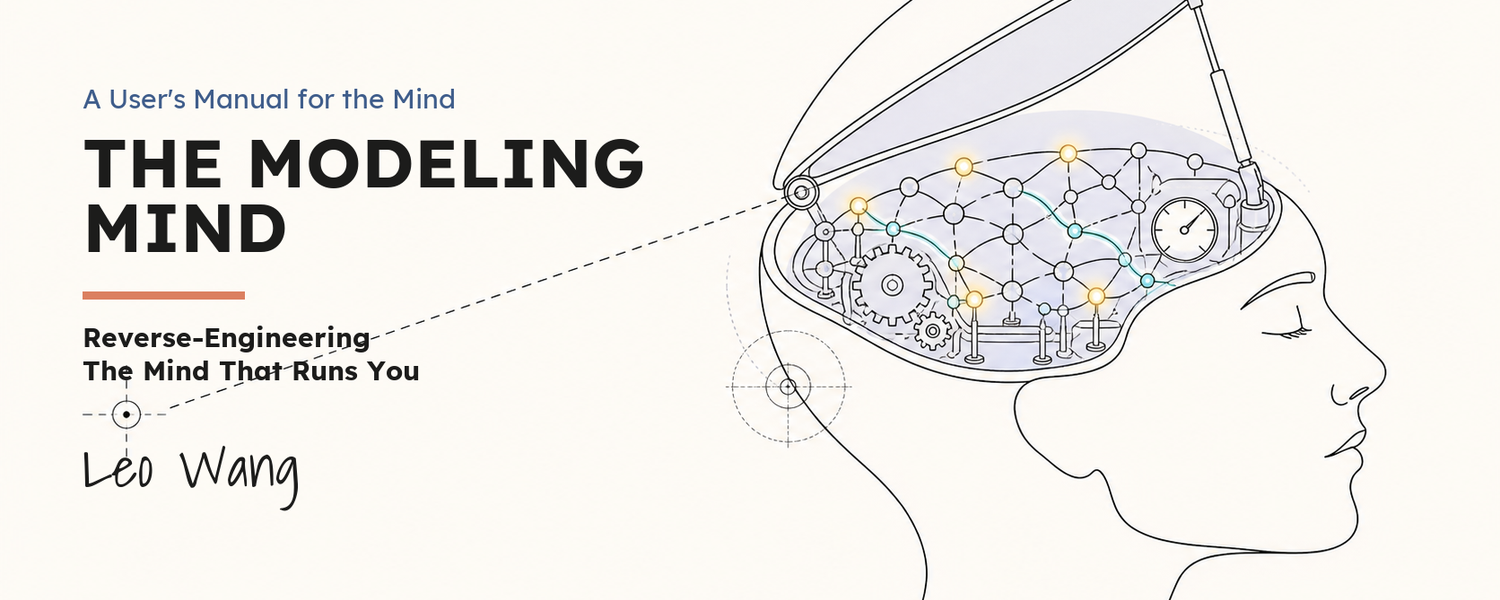
That half-second is where my book The Modeling Mind begins. I spent years building and investing in artificial intelligence, and at some point I noticed something that changed how I see everything: the architecture of the mind and the architecture of the systems we're building to mimic it are structurally the same — not metaphorically similar, structurally identical. This is not a spiritual book, a meditation manual, or a guide to enlightenment. It's a user's manual for the machine between your ears — a reverse-engineering guide for the prediction engine that runs your perception, your emotions, your decisions, and your sense of self, usually without your knowledge and almost always without your consent.
The book has 11 chapters, and each one dismantles a default setting your mind has been running on without ever asking you. Here they are, compressed into 11 specific, evidence-backed shifts — in the order the book builds them. Every claim below traces back to a named study. No "studies show." Actual researchers, actual journals, actual years.
Here's what's actually running underneath your everyday life.
1. You've spent roughly half your waking life somewhere your body wasn't.
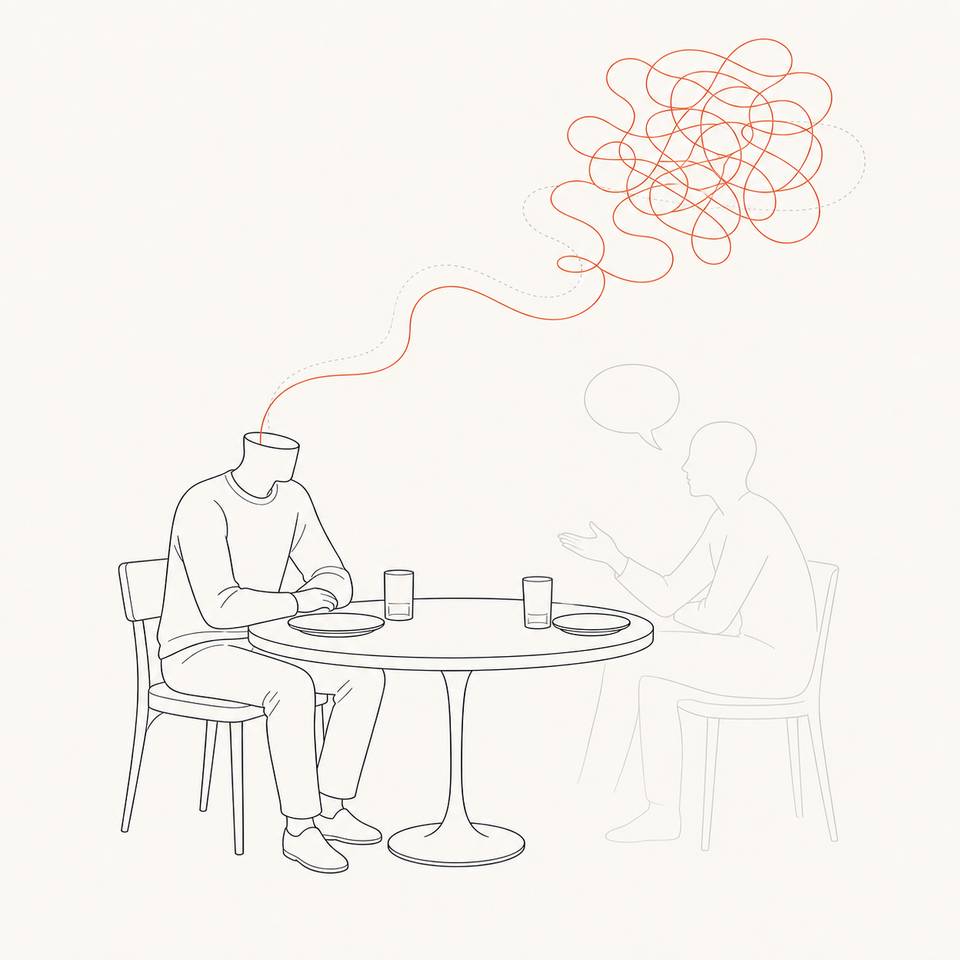
Not daydreaming on the bus — mid-conversation, at dinner, with people you love, nodding at the right moments while you're three miles away.
In 2010, Harvard psychologists Matthew Killingsworth and Daniel Gilbert built a phone app that pinged 2,250 people at random moments and asked what they were doing, thinking, and feeling. Published in Science: people's minds were elsewhere 46.9% of the time — almost half — regardless of the activity. And mind-wandering predicted unhappiness no matter what they were doing.
Do this today: Set three alarms at random, non-obvious times. Label them "Am I here?" When each one fires, ask only: What am I doing right now, and was I actually thinking about it?
The stranger part: the system that pulls you away runs on the same blueprint as the AI everyone's been talking about.
2. Your brain isn't a thinking machine. It's a prediction machine — structurally the same as the large language model that wrote your last email reply suggestion.
The book is careful about this claim: every place it draws the parallel, it flags whether it's literal engineering or analogy (marked with ≈). It's not a vibe. It's an architecture claim.
The "modeling engine" predicts your perception, your emotions, and your decisions before the conscious "you" catches up — the same way a predictive system generates an output before you'd call it a "thought."
Do this today: Catch one moment where you reacted to your prediction of what someone meant, not what they actually said. Ask them to finish the sentence before you respond.
3. You have never seen reality. You've only ever seen the desktop icons.
What you experience as "the world" is a layered render, built up from raw signal to the polished thing you call perception — the way a computer user mistakes the icon for the file it points to.
Do this today: Next time you feel 100% certain about your read on a person or situation, ask: Am I looking at the file, or the icon I cached for this a long time ago?
4. There are two processes sharing your skull, and most days only one of them talks.
One is the narrator — generating the running stream of thoughts you call "me." The other is the observer — the part that can watch the whole show without narrating it. Most people never consciously meet the second one.
This maps onto established clinical frameworks: cognitive defusion in Acceptance and Commitment Therapy (Steven Hayes), and what Richard Schwartz's Internal Family Systems calls capital-S "Self" — different cartographers, same territory.
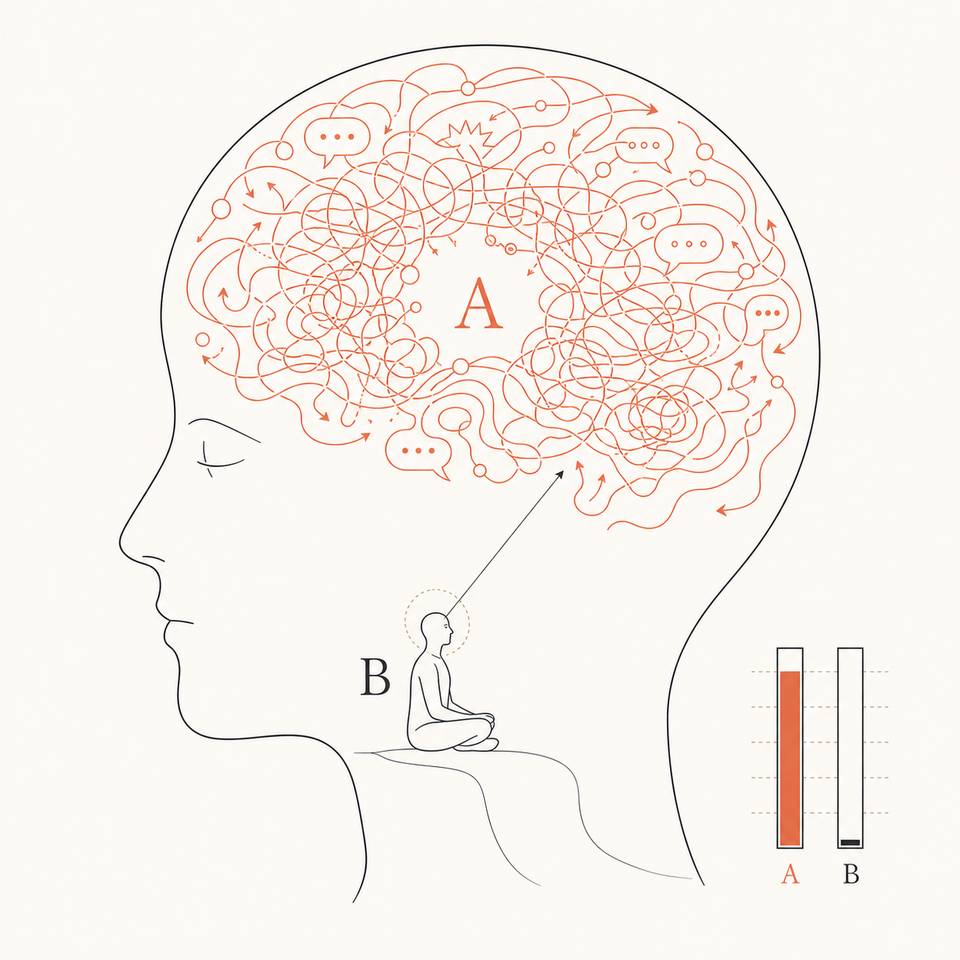
Do this today: Spend 20 seconds noticing your breathing. Then ask: who is noticing it? Whatever answers that question is the observer — possibly online for the first time today.
5. You can hold a job, raise kids, finish a PhD, fall in love and get divorced — and never once be behind the wheel.
The book calls this NPC mode, using Tesla's own driver-asleep problem as the image: the car holds the lane perfectly while the driver is unconscious. From the outside, you cannot tell the difference between a driver who's awake and one who isn't — the car drives the same either way.
Psychologists Jonathan Smallwood and Jonathan Schooler found something counterintuitive in a 2007 study: mind-wandering itself doesn't degrade performance. What degrades performance is mind-wandering without knowing you're doing it.
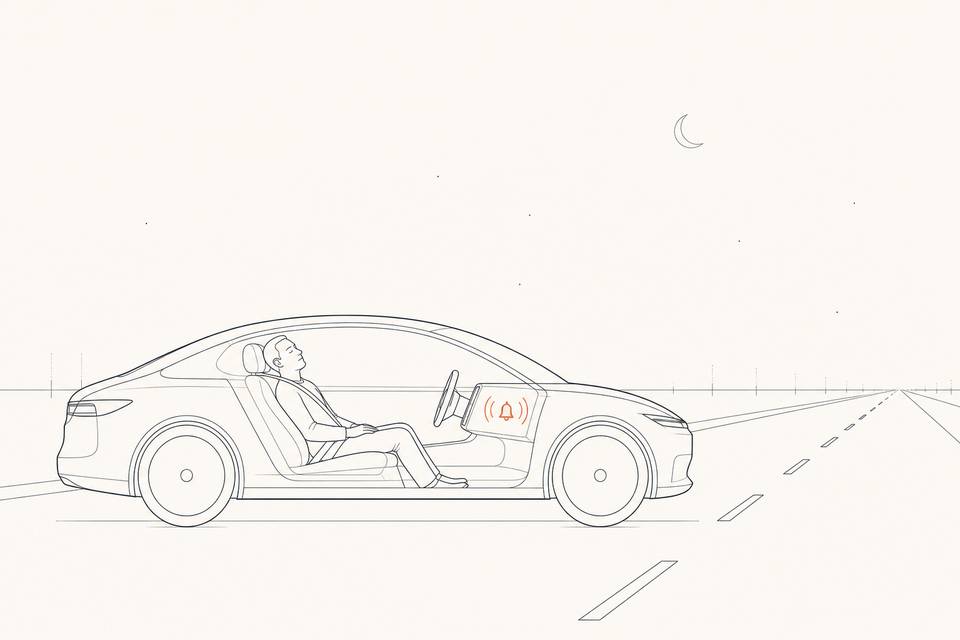
Do this today: Notice your next task-switch — closing a tab, sitting down to a new conversation. That's exactly when the research says autopilot is most likely to quietly take over.
6. People who are genuinely "awake" look exactly the same as everyone else from across the room.
Waking up isn't a lightning-bolt spiritual event. They still laugh, cry, get angry, and make the same mistakes as before. The difference is entirely internal — whether something registered the experience happening, not whether the experience changed.
Do this today: Stop scanning yourself for outward signs of "progress." The only real metric is whether you noticed.
7. Letting go was never about deleting the memory. It's one setting: turn off auto-save.
Most people picture "letting go" as wiping the slate clean. The book argues you can't delete the cache — you can only change what gets permanently written to it.
Matthew Lieberman's 2007 fMRI study in Psychological Science found that simply labeling an emotion ("I am feeling embarrassed") measurably reduces amygdala activity. Separately, Baljinder Sahdra's 2010 Nonattachment Scale research found that people who score high on this trait aren't numb — they feel fully; they just don't permanently file every feeling as identity.
Do this today: Next time something stings, say the feeling out loud in one sentence before doing anything else. That's the entire technique.
8. That personality trait you're so sure is "just who you are" might be code a five-year-old wrote to survive recess.
The book traces a single 3:47 p.m. reprimand at work through five people and a cat — the same emotional charge passed hand to hand, unexamined, at every link.
Your prefrontal cortex — the region responsible for impulse control and emotional regulation — doesn't fully mature until your mid-twenties (Caballero et al., Neuroscience and Biobehavioral Reviews, 2016; Vijayakumar et al., Social Cognitive and Affective Neuroscience, 2014). Your emotional defaults were written on hardware that hadn't shipped its most important chip yet.
Do this today: Pick one reaction you run on a loop — defensiveness, freezing, people-pleasing — and ask it one question: how old is this response?
9. Watching a bad pattern, without trying to fix it, is enough to start rewriting it.
This runs against instinct. The moment most people catch themselves on autopilot, they grab the wheel and yank it. The book's argument — and its central mechanism — is that the first move isn't force. It's observation.
This is the same mechanism behind point 7's labeling research, extended: noticing an automated pattern mid-execution, without reacting to it, is itself what interrupts the loop.
Do this today: Pick one automatic pattern this week. Practice catching it mid-execution — no fixing, no analyzing. Just see it happen.
10. Your life keeps snapping back to the same emotional temperature, like a thermostat someone else set and you don't remember hiring.
The raise that mysteriously vanishes back into the same bank balance six months later. The lost client that somehow resolves to the same baseline two months after the panic. The book calls this the behavioral set-point.
The "hedonic treadmill" hypothesis (Brickman & Campbell, 1971) was later revised by Ed Diener and Richard Lucas in a landmark 2006 American Psychologist paper: set-points are real, but they're not fixed. Sonja Lyubomirsky, Kennon Sheldon, and David Schkade's 2005 Review of General Psychology model found that circumstantial windfalls fade fast — but intentional, deliberate activities move the dial and stay moved.
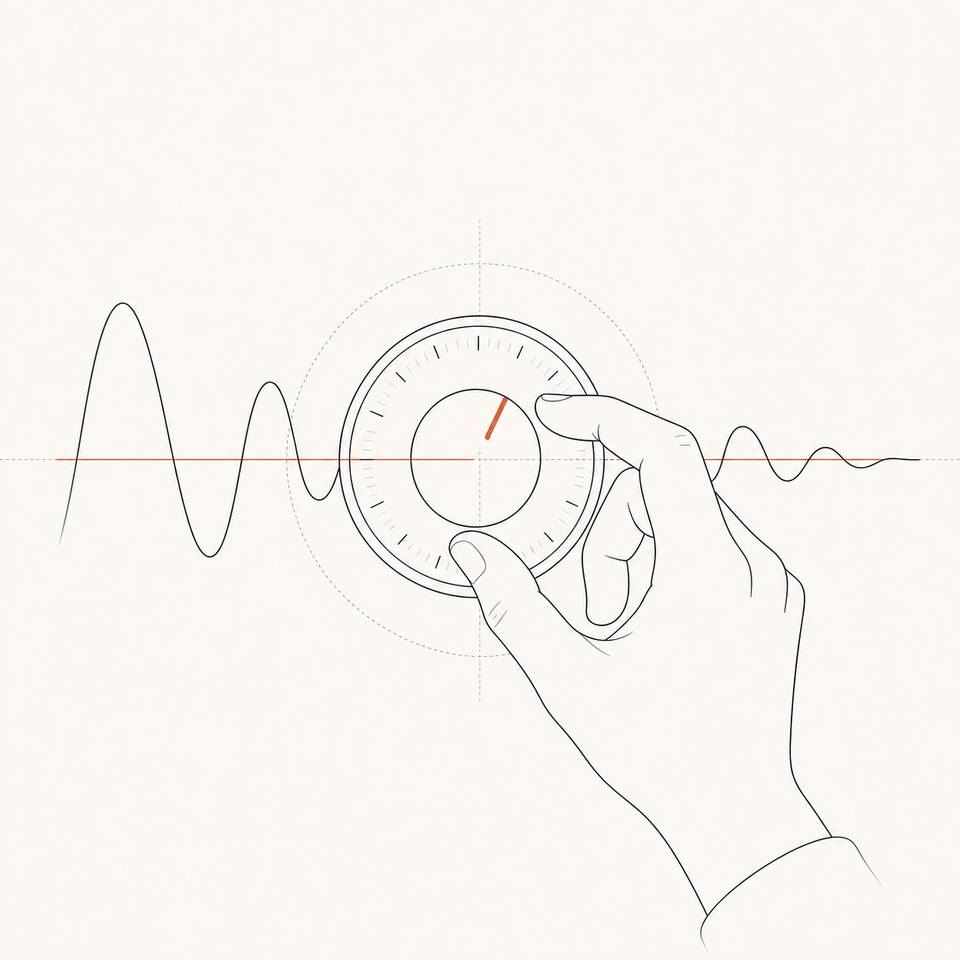
Do this today: Write one sentence describing your current set-point ("how things tend to go for me"). Then ask: was that sentence ever something you consciously chose?
11. Once you can finally steer the engine, the only question left is where you've been pointing it your whole life without ever asking.
An objective function doesn't care what it optimizes for — a neural network will learn to recognize cats or generate disinformation with equal enthusiasm. So will you, if nobody ever audits the function.
Kennon Sheldon and Andrew Elliot's 1999 self-concordance research, published in the Journal of Personality and Social Psychology, found that people who achieve externally-imposed goals get little to no boost in well-being from achieving them — a human version of "reward hacking." Edward Deci and Richard Ryan's Self-Determination Theory names the three conditions a genuinely aligned objective function has to satisfy: autonomy, competence, and relatedness.
Do this today: Write one sentence describing what your life is currently, behaviorally, optimizing for. Write a second sentence describing what you'd want it to optimize for instead. The gap between those two sentences is where the rest of the book picks up.
See the engine
Eleven shifts. Eleven chapters. Every one of them backed by a named study, not a vibe — and every one of them comes with a hands-on Protocol in the book itself, designed to be practiced in a commute, a meeting, or lying awake at 2 a.m. when the machine won't stop. The scientific references are real papers by real researchers; you have the right to verify what I claim rather than take it on faith.
Reading this book requires no beliefs, no meditation background, no spiritual framework, no particular worldview. Only a willingness to look — carefully, honestly, with the same curiosity you'd bring to understanding any system.
The machine is already running. It has been running your whole life. The only question is whether you want to see it.
The Modeling Mind — PDF + EPUB:
- English Edition ($29): leowangpress.gumroad.com/l/the-modeling-mind
- 简体中文版 ($19): leowangpress.gumroad.com/l/the-modeling-mind-cn
- 繁體中文版 ($19): leowangpress.gumroad.com/l/the-modeling-mind-tr
If this book changes how you see your own mind, it's the first in a series I'm writing on the mechanics of attention, identity, and living awake. You'll find each new title at leowang.net.
— Leo Wang